Japanese-Style Paintings Created with Leftover Drip Coffee Grounds
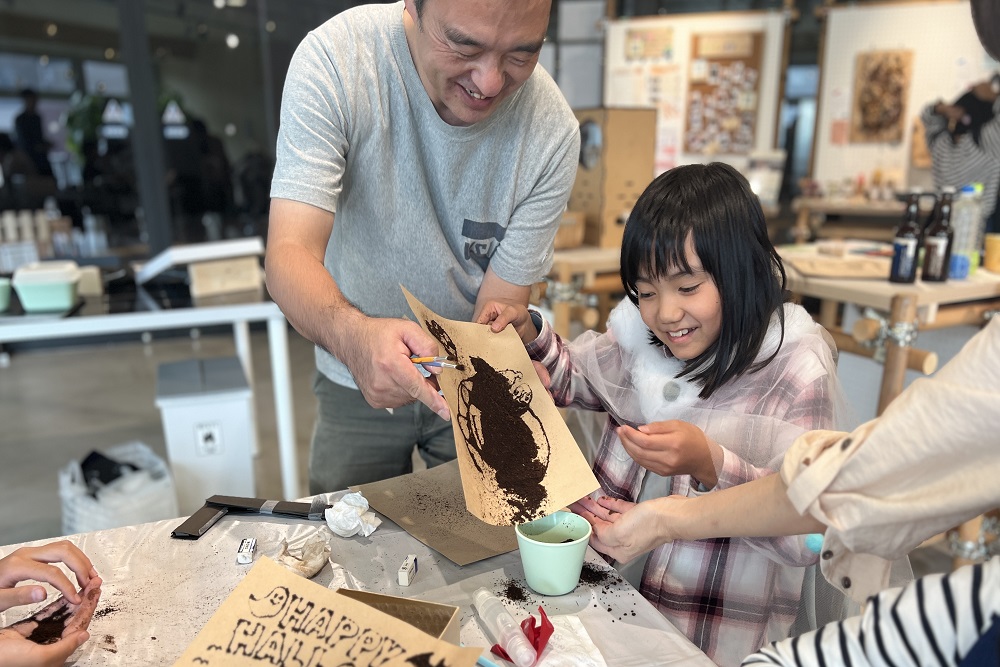
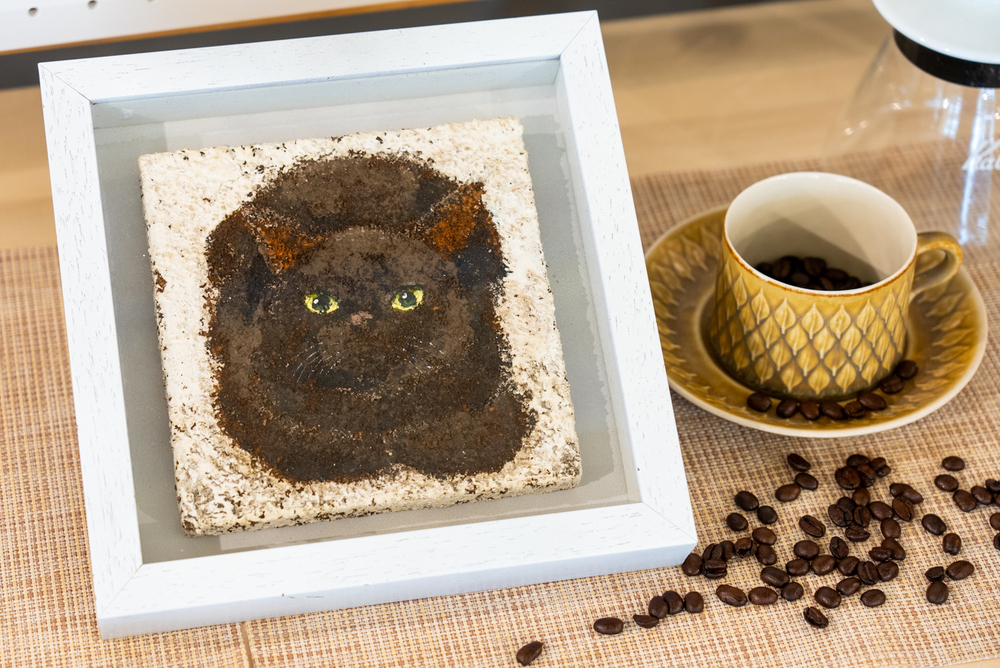
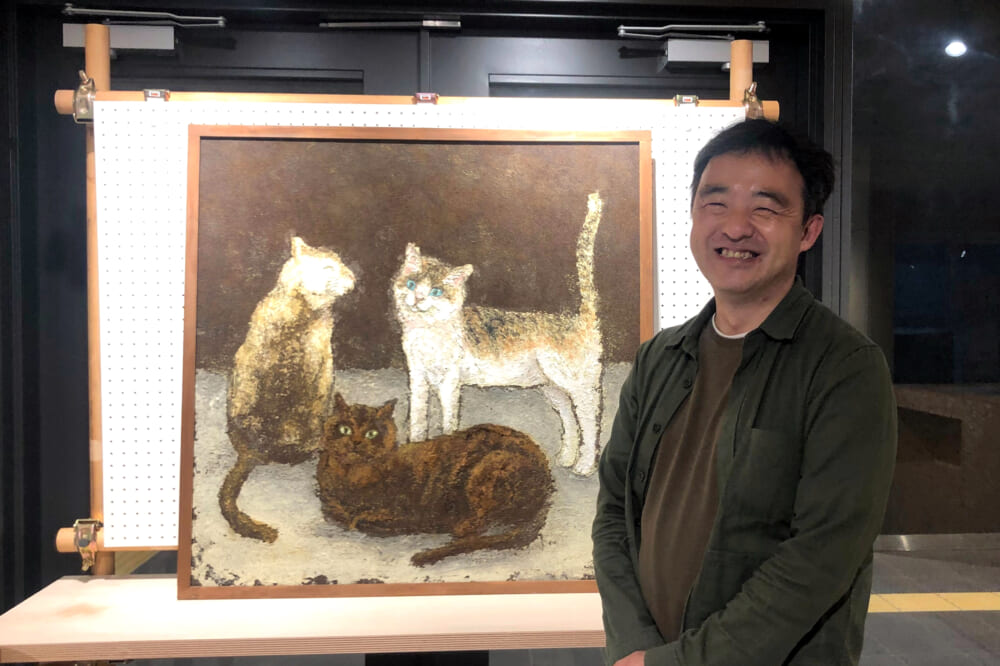
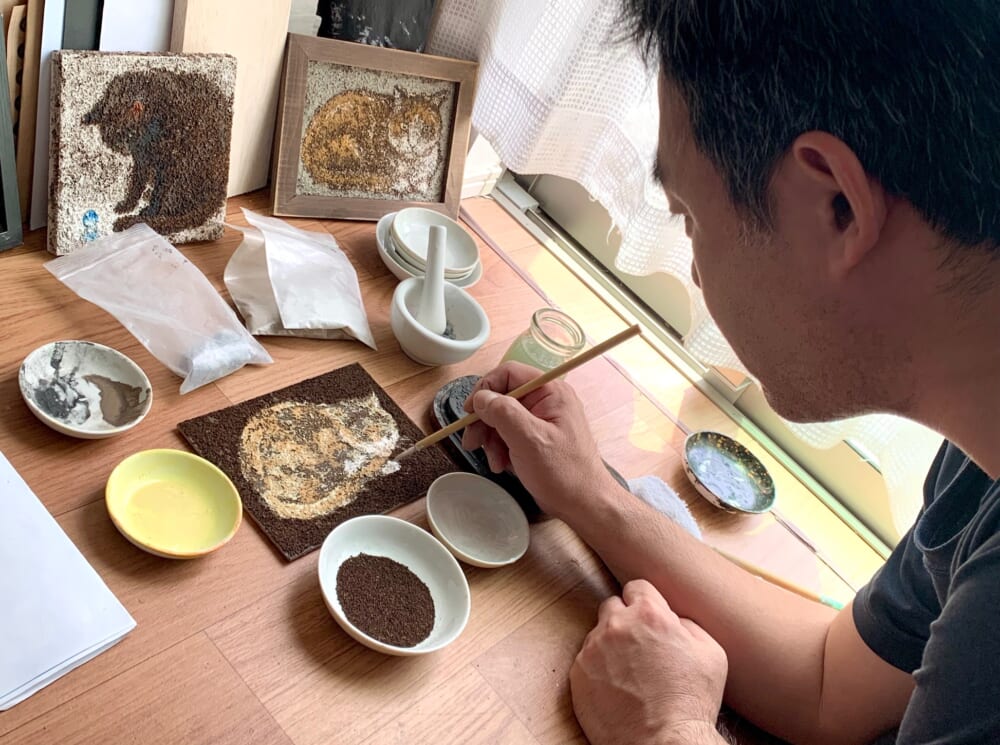
This upcycled art form, which uses the grounds left behind after brewing drip coffee as paint, was conceived by Shinichi Nakata, a Yokohama‑based Nihonga (Japanese‑style) painter, sculptor, and art teacher.
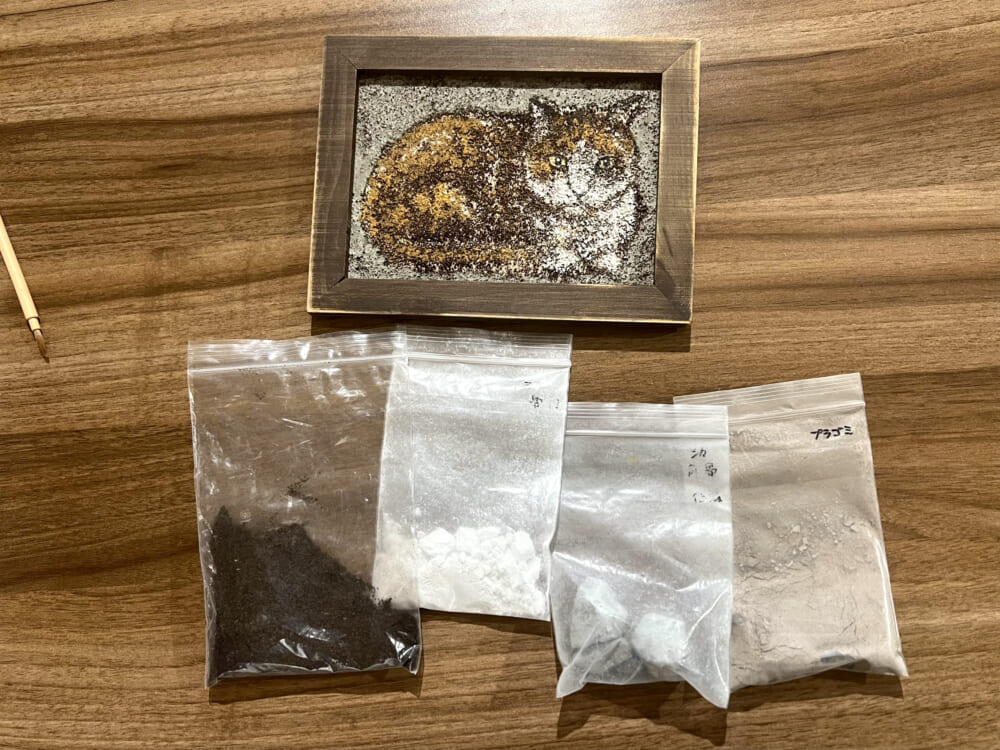
Nakata began experimenting with coffee grounds around 1995. It started simply because he liked drinking coffee and felt that the grit of the grounds resembled the texture of Japanese-style painting pigments. Today, in addition to coffee grounds, he sometimes mixes other reclaimed materials: gofun (a traditional white pigment made from ground seashells), pigments made from deer bones and antlers supplied by eco‑artist Ayami, roasted tuna bones, bamboo, and even powdered plastic.
Besides appearing in Nakata’s solo exhibitions, his coffee‑ground Nihonga are also shown at the YOKOHAMA CIRCULAR DESIGN MUSEUM operated by Circular Yokohama.
What Makes the Project Circular
1. Upcycling everyday waste into art
Coffee consumption is on the rise worldwide, and in Japan, cafe chains have made coffee an everyday indulgence. Yet most spent coffee grounds are discarded. By treating those grounds as pigment and showcasing their natural tone and texture, Nakata’s paintings give what would have been a waste a second life. It’s an exemplary case of upcycling, where design and fresh ideas add value to discarded material.
2.Workshops that turn local resources into environmental education
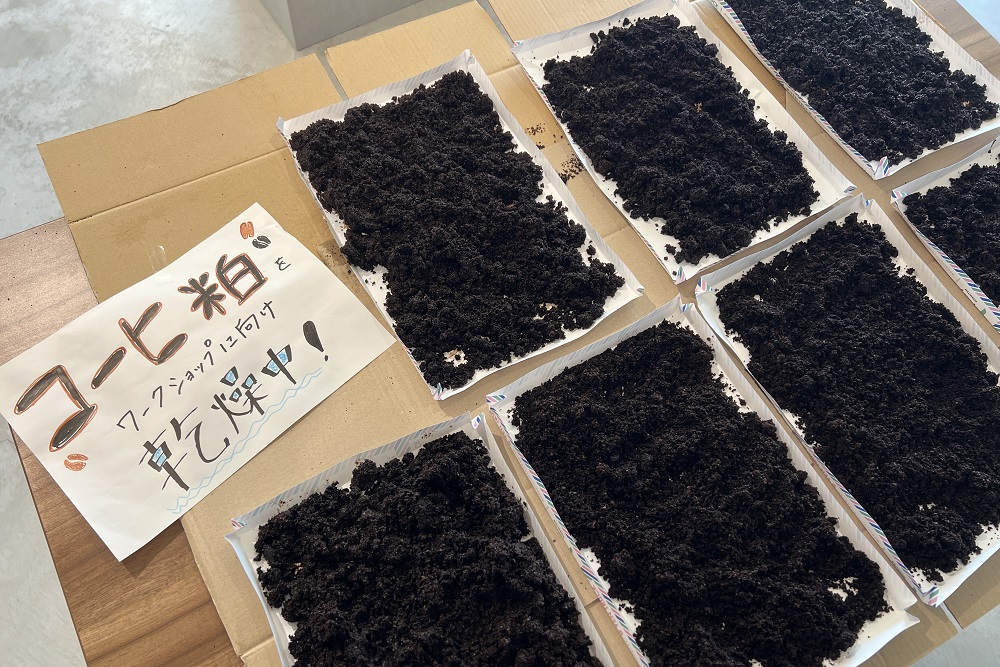
Because coffee is so familiar, it also works well as a teaching tool. Nakata and Circular Yokohama has hosted workshops where participants make art with coffee grounds collected from local cafes. Sourcing materials from local partners reduces waste and keeps resources circulating in the community, while letting participants discover value in something they normally never notice after buying a cup of coffee.
3. Learning to address “waste” through coffee
Japan consumes about 400,000 tons of coffee beans a year (according to All Japan Coffee Association). Because spent grounds are wet, they can weigh more than twice as much as the beans themselves when discarded without drying. Although each painting uses only a small amount of coffee grounds, Nakata’s work re‑examines them as a resource. If viewers become interested in today’s waste issues and start drying and reusing food scraps or even explore upcycling ideas as a business, the cumulative effect could reduce waste over the long term.
Project Overview
| Organizer | hinichi Nakata, Japanese-style painter / sculptor |
| Category | Education, Reduce, Rethink |
| Introduced | Around 1995 |
| Address | Yokohama, Kanagawa Prefecture, Japan |
| URL | https://shinichinakata.wixsite.com/mysite |
| Contact | Please inquire viathe Website. |