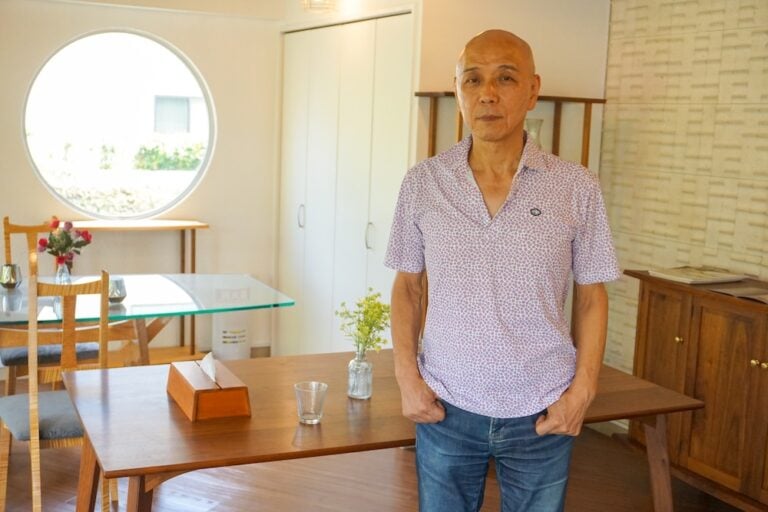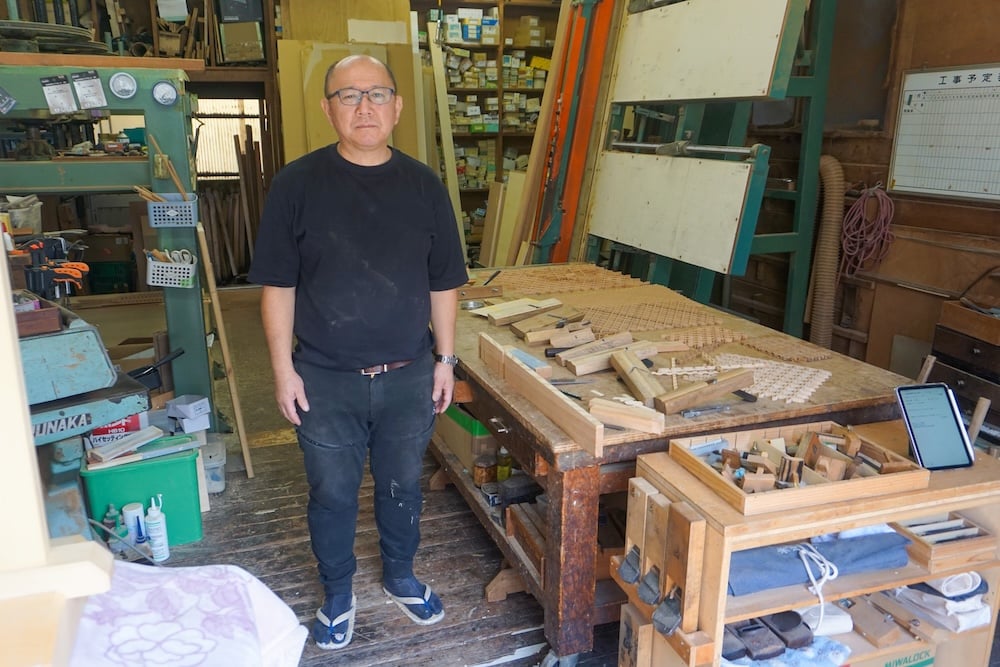
Kumiko (組子) is the art of assembling intricate wooden pieces without nails or metal fittings to create delicate geometric patterns. Long used to adorn shoji screens and ranma transoms, it is a technique that even today’s joinery craftspeople rarely have the opportunity to practice in their day-to-day work. Masao Noguchi (野口正男), the second-generation owner of Noguchi Joinery, continues to refine his kumiko skills alongside his everyday joinery work. We spoke with Noguchi, who as a Yokohama Meister (※) is dedicated to sharing his craft and nurturing the next generation, about the appeal of joinery, his professional philosophy, and his thoughts on passing down these skills.
※ The Yokohama Meister program is a City of Yokohama initiative that recognizes outstanding skilled tradespeople who contribute to the lives and culture of its citizens. Marking its 30th anniversary in 2026, the selected Yokohama Meisters serve as representatives of the city’s skilled trades community, devoting themselves to mentoring the next generation and preserving traditional techniques. In this series, we speak with Yokohama Meisters active across a wide range of fields about their personal philosophies and professional aspirations.
※ This article is a lightly edited reprint of a piece originally published on “Watashito,” operated by YourMystar Co., Ltd.
From Sudden Redundancy to Second-Generation Owner of Noguchi Joinery
—— What led you, Meister Noguchi, to pursue a career as a joinery craftsman?
I wasn’t particularly fond of wood or joinery as a child. As the eldest son, I had a vague sense that I would eventually have to take over the family business.
After graduating from university, I joined a property developer. I started in April, but the bubble economy collapsed, and on December 1st of my first year, all new employees were let go due to company circumstances. The very next day, my father told me to come and work for him, and so I entered the family business.
If the company had survived, I might never have become a joinery craftsman. Looking back now, though, it turned out to be a wonderful turning point. I’ve never once wanted to quit, or wished I were doing something else — I love this work that much.
—— How did your father come to be a joinery craftsman?
My father is from Tokigawa Town in Saitama Prefecture, and my grandfather worked felling trees in the mountains. When it rained, there was no work and life was hard. So my grandfather told my father to find a job that wasn’t dependent on the weather, and my father apprenticed under an uncle who worked in joinery.
Wanting to learn more of the trade, my father left for Tokyo to train after about four years. After working at various joinery shops, he eventually set up on his own in Kawasaki. Later, with the help of a farming family he had worked for, he purchased the land where the shop now stands — which was a rice paddy at the time. We moved to Yokohama when I was about two years old.
Seeking Skills the Family Business Couldn’t Teach: Enrolling in a Vocational Training School
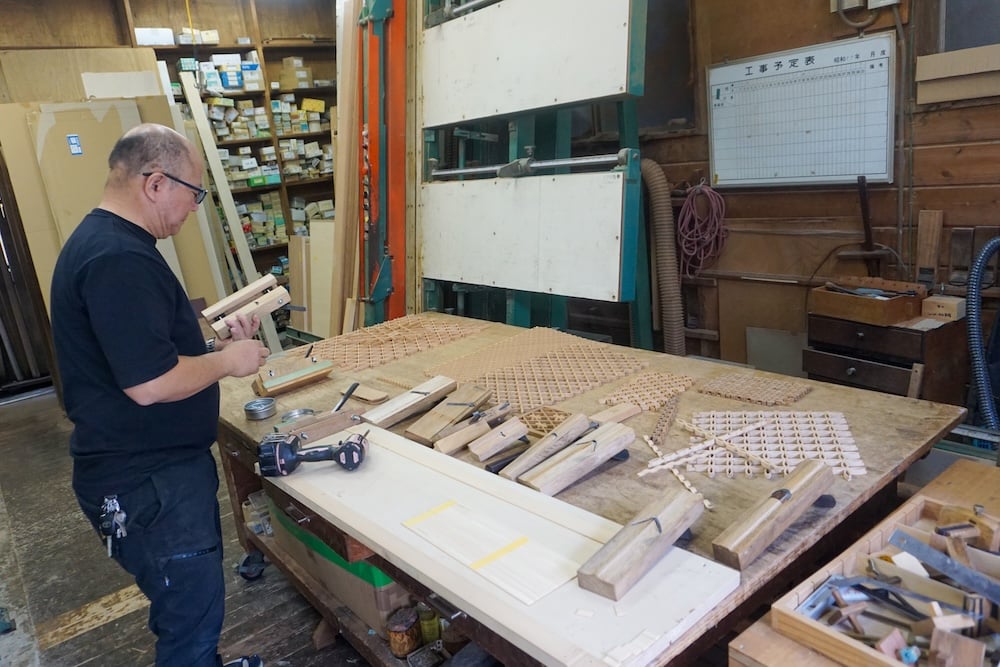
—— How did you develop your skills after joining the family business?
There was a particular strictness that came with being the heir. Even my older cousins, who had always been playful with me before, began training me rigorously as a fellow craftsman the moment I joined the business. I also had to come to terms with the fact that one day I would be working above them.
After learning the basics at home, I heard about a long-established joinery vocational training school in Tokyo.
My father asked me why I would need to go somewhere like that, but I was determined to attend. I enrolled as the 39th cohort and commuted once a week for two years. Work was often too busy for me to attend the classroom sessions, but I was absolutely determined not to miss the practical skills training, and there were times I worked through the night beforehand just to make it. I managed to attend about half of the sessions overall, but I was allowed to graduate. I also passed the graduation exam, which exempted me from the written portion of the Level 2 Technician Certification. I later obtained the Level 1 Technician Certification here in Kanagawa Prefecture.
—— What did you gain from the vocational training school?
What surprised me most was discovering just how many young joinery craftspeople there were of my generation. My cohort had around 18 students, ranging in age from about 18 to 29. I was around 27, so I was on the older end.
I was also struck by the fact that four or five of them had chosen to become joinery craftspeople entirely on their own initiative, without coming from a joinery family. In ordinary working life, you almost never meet other joinery craftspeople, so it was genuinely exciting.
These days many tasks are done by machine, but at the training school we learned the fundamental hand-processing techniques that craftspeople of the past took for granted — skills that are essential to have. Every workshop operates differently, and even the instructors had different things to say, so everything I was taught felt fresh.
About three of my classmates from Kanagawa are now on the executive board of the prefectural joinery association, and we’re still in touch. The connections I made at the training school were just as valuable as the technical skills I gained.
Honing Kumiko Technique and Winning the Gold Prize at the Skills Grand Prix
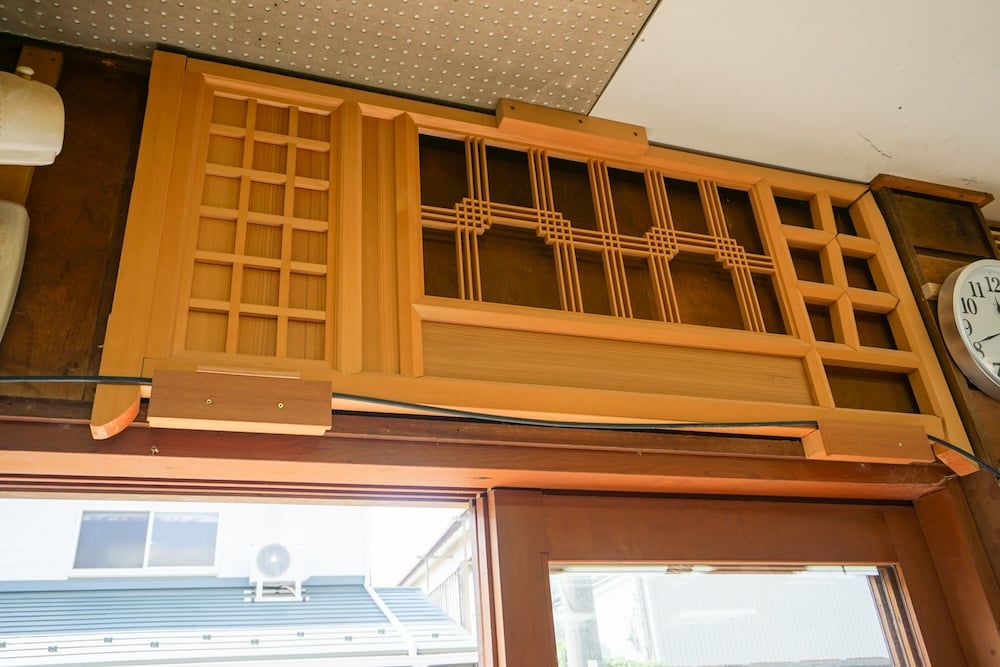
—— Could you tell us about the characteristics and appeal of joinery (建具, tategu)?
Simply put, joinery refers to movable fittings used to partition framed openings — a collective term for shoji screens, glass doors, doors, and the like.
These are things people interact with every day, yet many people don’t know the word tategu, or can’t read the characters. Most people say “door” (ドア) or “tobira” (扉), and “tategu” is probably a term used mainly by people in the trade.
Traditional Japanese homes commonly had two adjoining tatami rooms, fitted with all manner of joinery: partition ranma transoms, smoke-vent ranma, nekoma shoji, shoin shoji, and more. A pair of adjoining rooms might contain as many as 30 pieces of joinery. Modern homes rarely have Japanese-style rooms, and with fewer openings, the number of joinery pieces has declined accordingly.
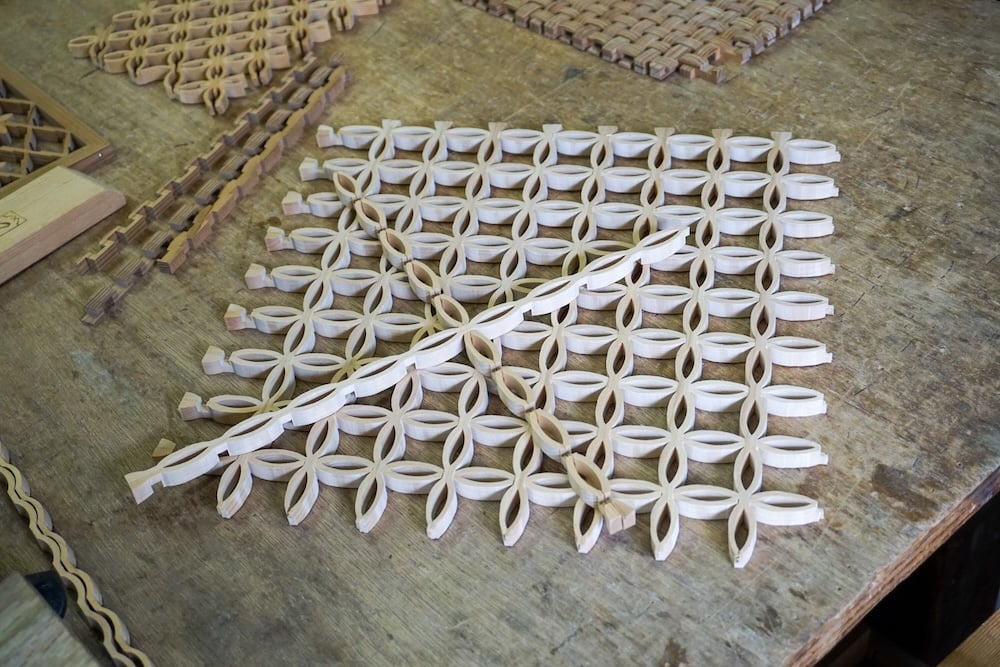
—— How did you learn the art of kumiko?
Kanagawa Prefecture has a program called the “Keishō Juku” (Succession School), through which experienced master craftspeople teach traditional techniques to mid-career practitioners. Through that program, I learned kumiko and traditional joinery techniques from Toshio Tanaka (田中利男), who is now an Honorary Yokohama Meister.
Since then, I have continued learning independently by studying various works. There is very little historical documentation on kumiko. It was once considered a closely guarded secret — I’ve heard stories of master craftspeople who wouldn’t even show their own apprentices, beginning their kumiko work at around two in the morning.
These days, some people share their techniques on social media, making it much easier to access information than it used to be.
That said, being taught is not enough on its own. You have to make things yourself, learn from your mistakes, and keep going. Since opportunities to make kumiko joinery rarely arise in everyday work, you have to actively seek them out, or your skills will never improve.
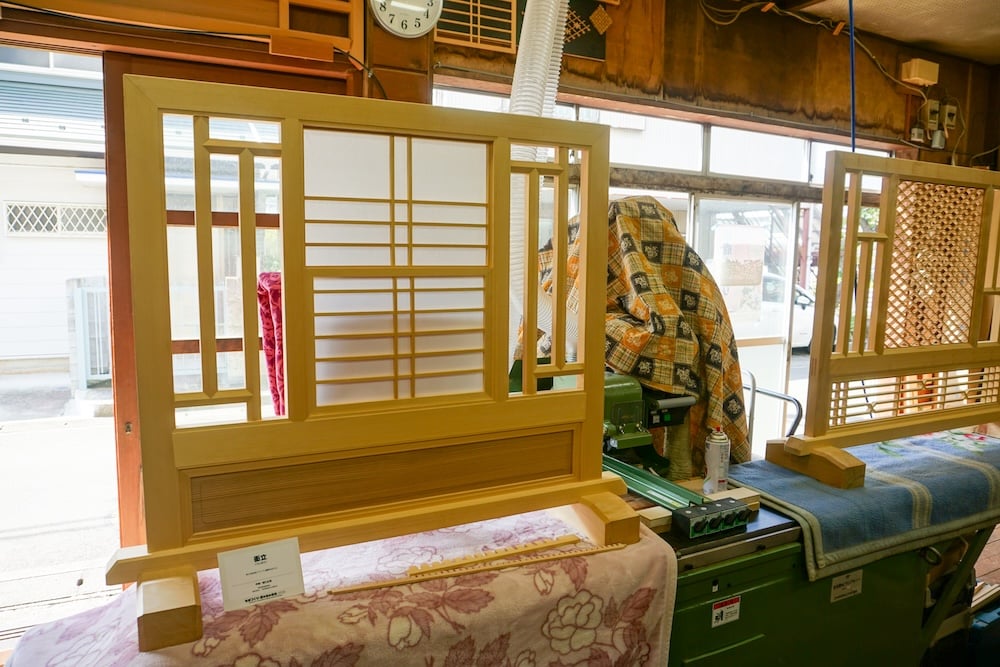
—— You have also competed in the Skills Grand Prix. Could you tell us about the competition?
The Skills Grand Prix is a national competition in which Level 1 Technicians across 30 trades compete to determine the best in Japan for that year. In the joinery category, all competitors make the same prescribed piece. Materials are provided at the venue, competitors bring their own tools, and the work must be completed over two days totalling 12 hours. Some stages allow the use of machines, but most of the work is done by hand.
In the joinery task, if even one component is slightly too tight, the strain accumulates as you assemble the piece — the last parts may not fit at all, or conversely, gaps can appear when you try to make adjustments. Getting every single joint to fit perfectly flush is an extraordinarily difficult feat.
The task is announced about three months before the competition. For this round, I made 12 practice pieces, with the competition piece being my 13th. I had never made more than ten before, but I had heard that all previous winners had always made at least ten before competing, so I started by preparing materials for ten. When I finished those with time still remaining, I made two more, bringing the total to twelve. Balancing practice with regular work is always demanding, but at the Osaka competition in 2026 — my fifth time entering — I was honoured to receive the Gold Prize.
Precision Above All: What Joinery Demands
—— What do you consider most important as a joinery craftsman?
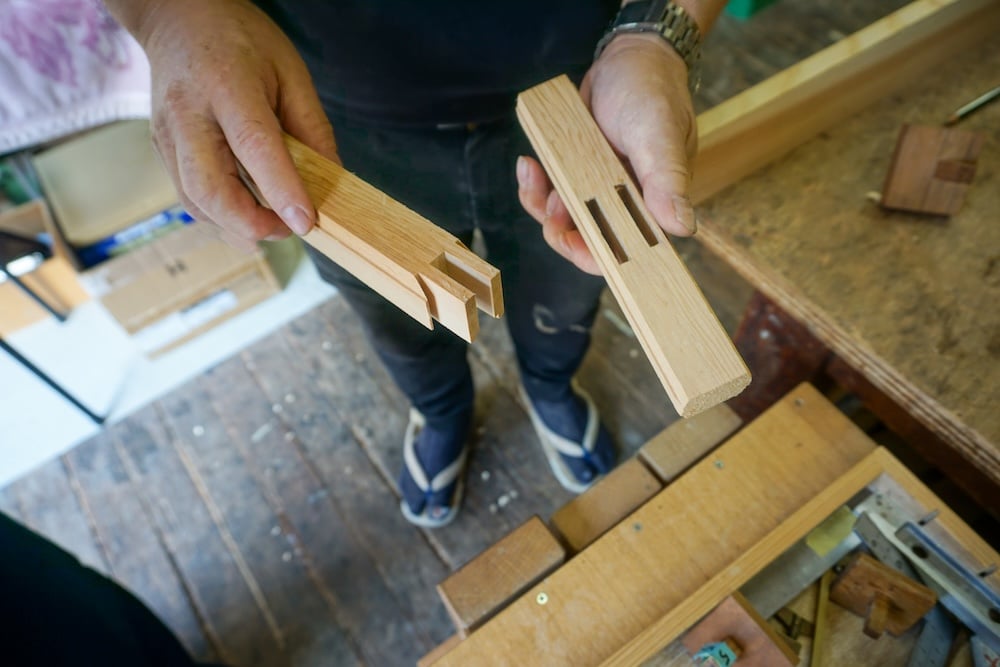
Doing work that satisfies the customer. First and foremost, that means meeting deadlines. Of course the work must be beautiful, but getting the measurements right is equally critical. If you bring a piece to the site and the dimensions are wrong, everything is wasted. I think that’s the one thing every joinery craftsman is most careful about.
I also pay constant attention to the finish of the joints. Getting one section to fit perfectly means nothing if another part is off. I adjust everything while keeping the whole picture in mind, making sure it all comes together just right. Years of intuition and experience play a big part in that.
—— When do you find the greatest satisfaction in your work?
After I was selected as a Yokohama Meister, a client who had seen my work at the Yokohama Meister Exhibition approached me about making a piece of joinery with kumiko covering the entire surface. It’s deeply rewarding when everything I’ve worked toward leads to new opportunities like that.
Being selected as a Meister and my involvement in the trade association have both played a part in that. Without the association, I don’t think I would ever have entered the Skills Grand Prix or exhibited my work at trade shows.
—— There must be many people who would love to incorporate kumiko if they have a Japanese-style room.
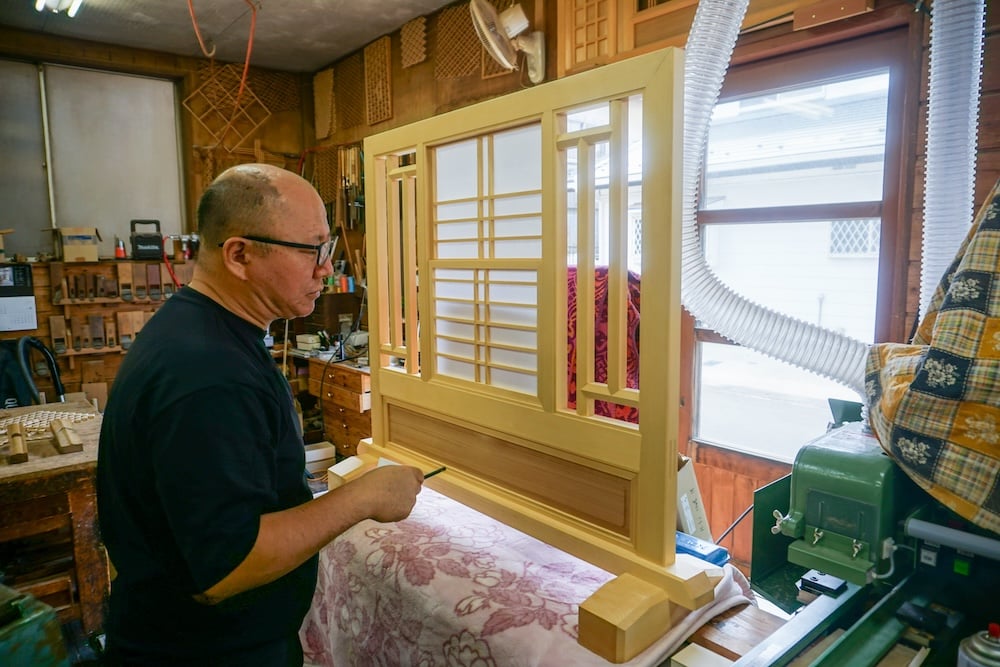
It doesn’t have to be a Japanese-style room at all. Kumiko can be used in Western-style door panels, room dividers, or as a light panel in a bathroom, for example. The current mainstream is flush joinery with a plywood core, but even cutting out a small section and inserting a piece of kumiko can completely transform the feel of a space.
—— What tools are used for such precise work?
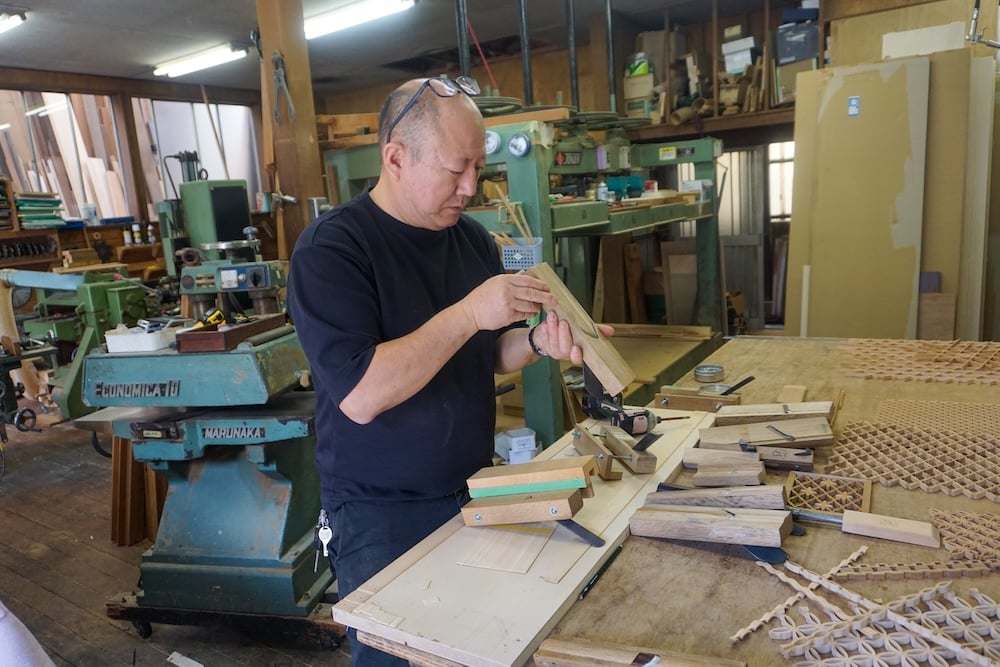
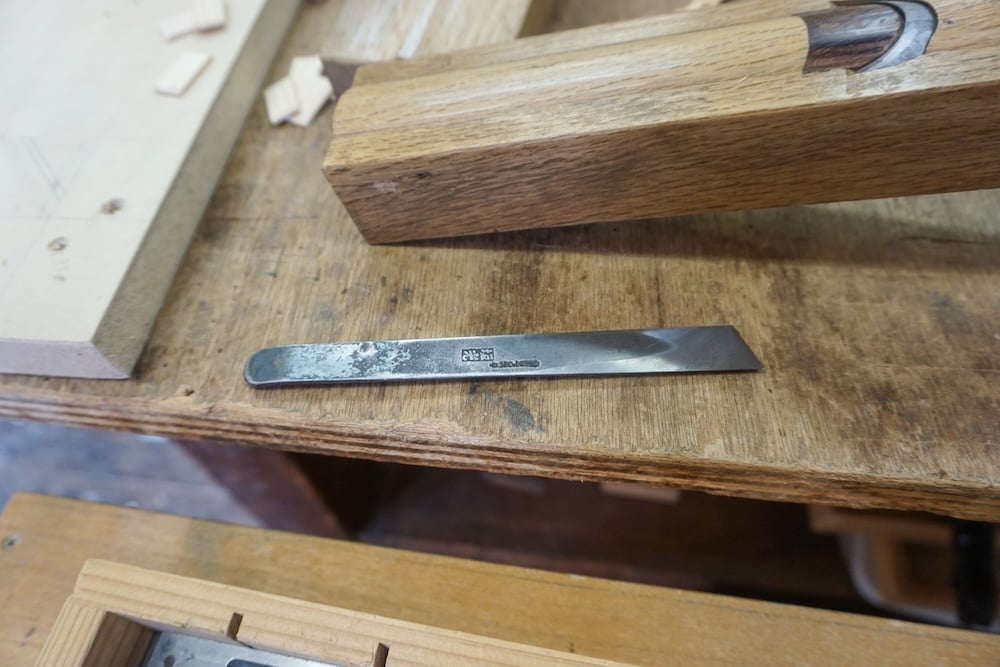
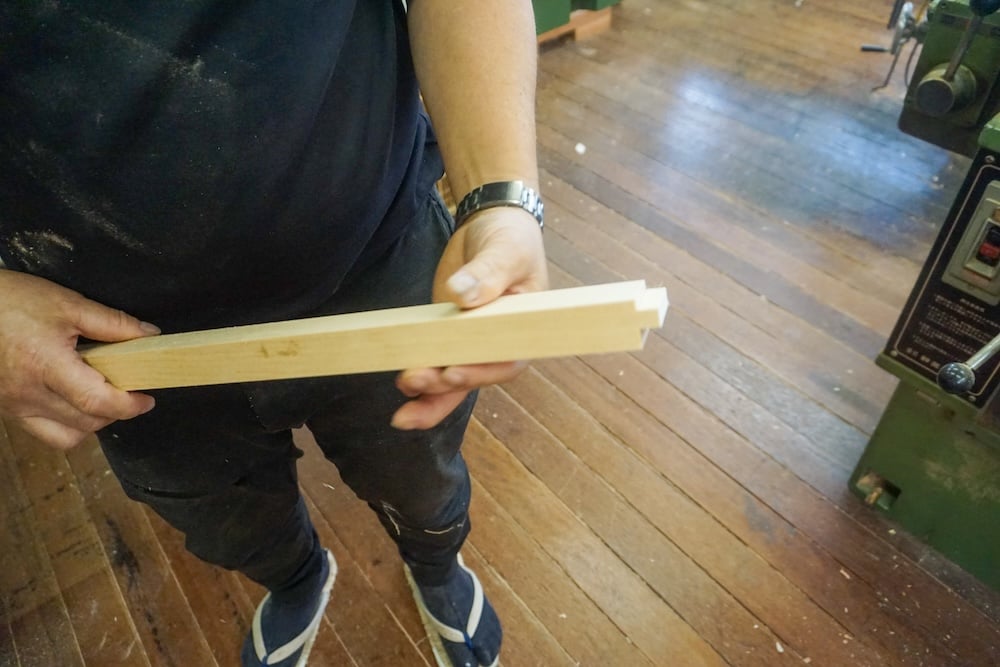
Joinery craftspeople mark their components using a tool called a shiragaki (白柿), also known as a shirahiki. The “ni-cho shiragaki” (double-blade shiragaki) has two blades and can be adjusted to match the width of the kumiko strips used in shoji screens and similar pieces. It scribes two lines in a single pass, and the groove between them is then chiselled out. If the marking is not accurate, the assembled piece will be misaligned.
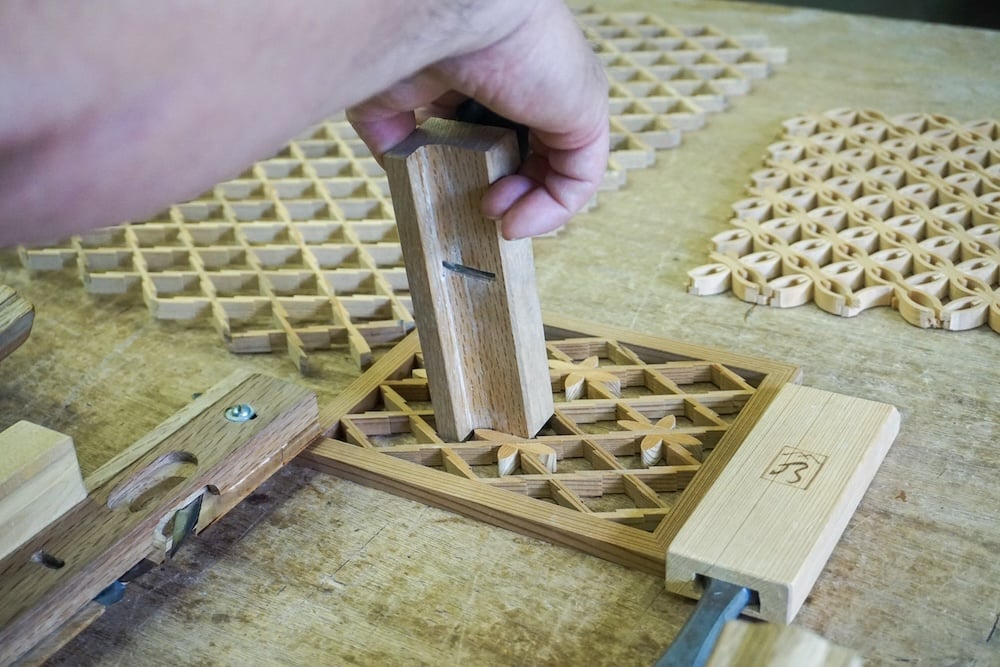
For flower-pattern kumiko, there are many different types of hand planes (kanna), each shaped and angled for a specific purpose. The craftsman switches between planes to shape each individual component, then assembles them into the pattern. Some planes have multiple blades, all of which must be sharpened to an even height. If one spot is sharpened too much, all the other blades must be brought down to the same level — keeping the blades in good condition is an ongoing challenge.
Passing Inherited Skills On to the Next Generation of Craftspeople
—— What skills and values do you hope to leave behind for the joinery industry going forward?
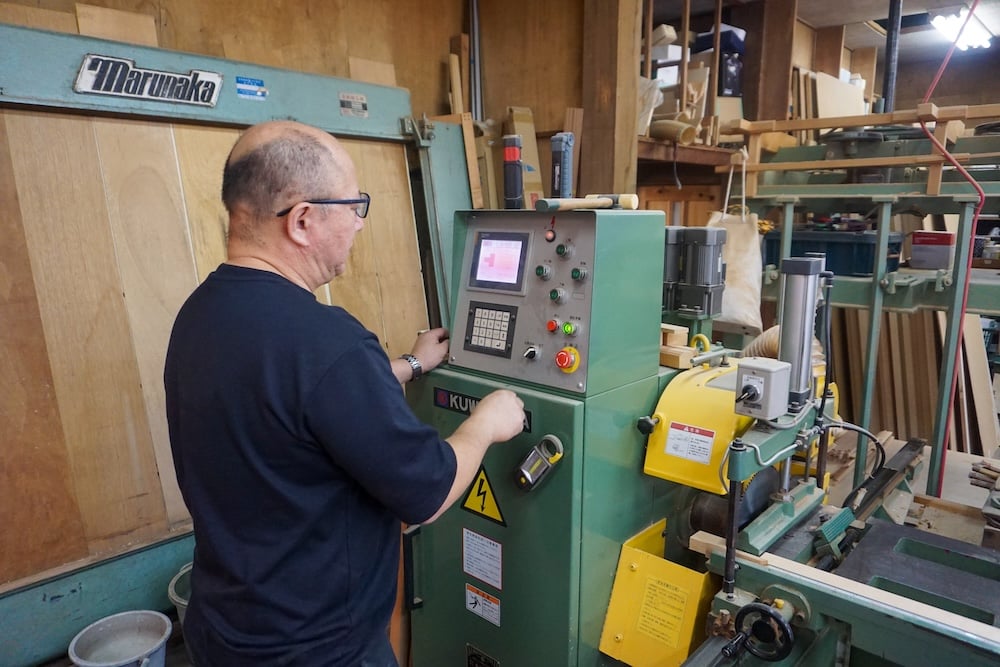
The techniques I learned from Honorary Meister Tanaka are ones I want to pass on to younger craftspeople and fellow association members. I hold workshops and, after the Skills Grand Prix, I bring my competition pieces along and explain how they were made.
I always encourage young craftspeople to enter the Skills Grand Prix, but it’s hard to get them to commit. It affects their regular work, there’s no prize money, and the cost of practice materials and tools adds up quickly.
I started using social media because I wanted to spread awareness of joinery and its techniques, even just a little. I myself have learned a great deal from others through Instagram — there are techniques I first discovered through posts. So I want to share what I know as widely as I can.
Some people visit the workshop after saying they’ve been following my posts. A young craftsman who competed in the Skills Grand Prix from Gunma Prefecture also came to see my previous work after the task was announced.
Since it’s a competition, some people feel uncomfortable with competitors sharing knowledge with one another. I understand the view that “this isn’t a social club.” Even so, I value the connections that come through competition. And I want young craftspeople here in Kanagawa to have those same experiences.
Editor’s Note
Seeing a kumiko piece up close — its intricate geometric patterns arranged with such regularity — I found myself catching my breath at the sheer precision of it all. Nearly every step is carried out by hand, one piece at a time, and the workshop is lined with hand planes for every type of component. Even in the calm, measured way Noguchi spoke, you could sense the steady, honest dedication with which he has honed his craft day after day.
Before this interview, joinery and kumiko were largely unfamiliar worlds to me. While kumiko rarely appears in everyday joinery work, it can be quietly woven into daily life — as a light panel in a bathroom, for instance. Hearing Noguchi talk about using social media to share his techniques, I came to feel that bringing traditional craftsmanship into familiar, everyday spaces might itself be one way of keeping these skills alive for future generations.
Shop Information
Name: Noguchi Joinery Co., Ltd. (有限会社野口建具店)
Address: 218-2 Kamoshida-cho, Aoba-ku, Yokohama, Kanagawa
Instagram: https://www.instagram.com/masaon123/
【Source Article】Skills Learned Only Through Practice: Passing Down Inherited Joinery Craftsmanship to the Next Generation [Yokohama Meister: Masao Noguchi] | Watashito
【Related Article】A Hundred Years of Use Aligns with the Cycle of a Growing Tree. A Craftsman’s Job Is to Look After Furniture for Its Entire Life [Yokohama Meister]
【Related Article】Throwing Clothes Away Is Such a Waste. I Want to Use Dry Cleaning to Help People Enjoy Fashion for Longer [Yokohama Meister]