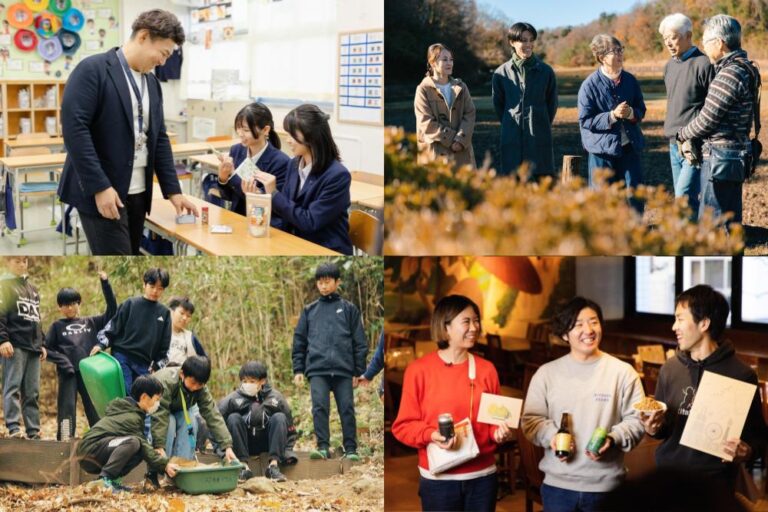
When more people feel that “the sea is wonderful,” more people come to love their community — and more people want to make the future a better place. That vision gave rise to “umi to mirai,” a fieldwork program set against the waters of Kanazawa-Hakkei.
The program was conceived by Tomoko Noda (野田友子), representative of Oc&co., Inc. (Oc&co., Inc.; hereinafter Oc&co.), a company based in Kanazawa Ward. She says the initiative was sparked by the birth of her child, which made her want to “take a step forward for the future.”
Rather than simply studying marine environmental issues in a classroom setting, this half-day program immerses participants in the sea itself — visiting a kelp farm, trying their hand at fishing, and experiencing the ocean firsthand. This article reports on the day’s events, following participants as they confronted the challenges facing the sea and explored ideas that could connect to their own work and activities.
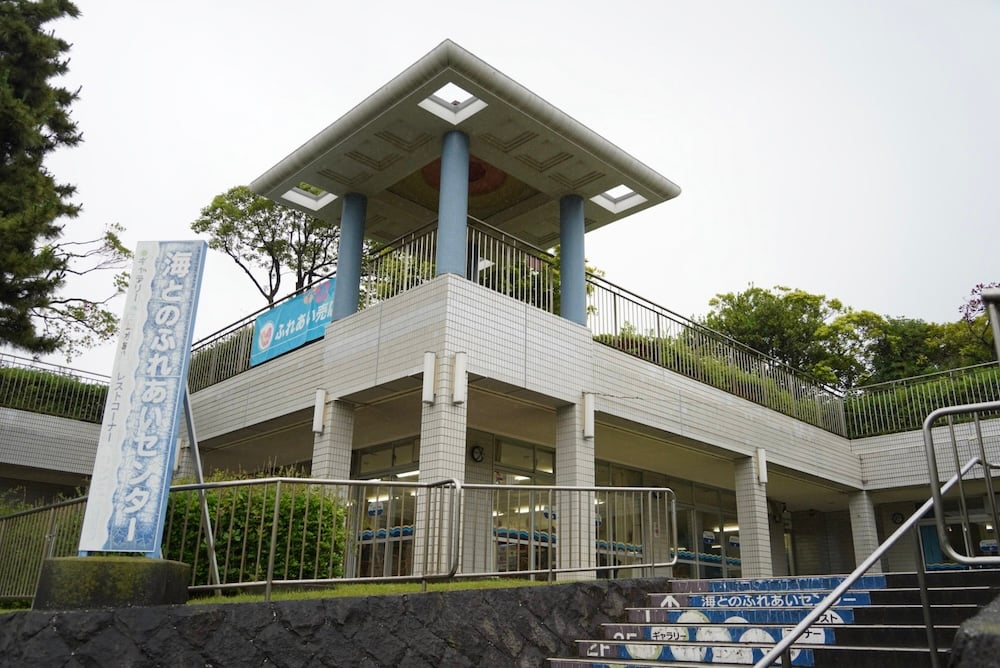
The Umi to no Fureai Center, which served as the venue for the lecture and workshop sessions
Knowing the “Richness of Having the Sea” Connects to the Community’s Future
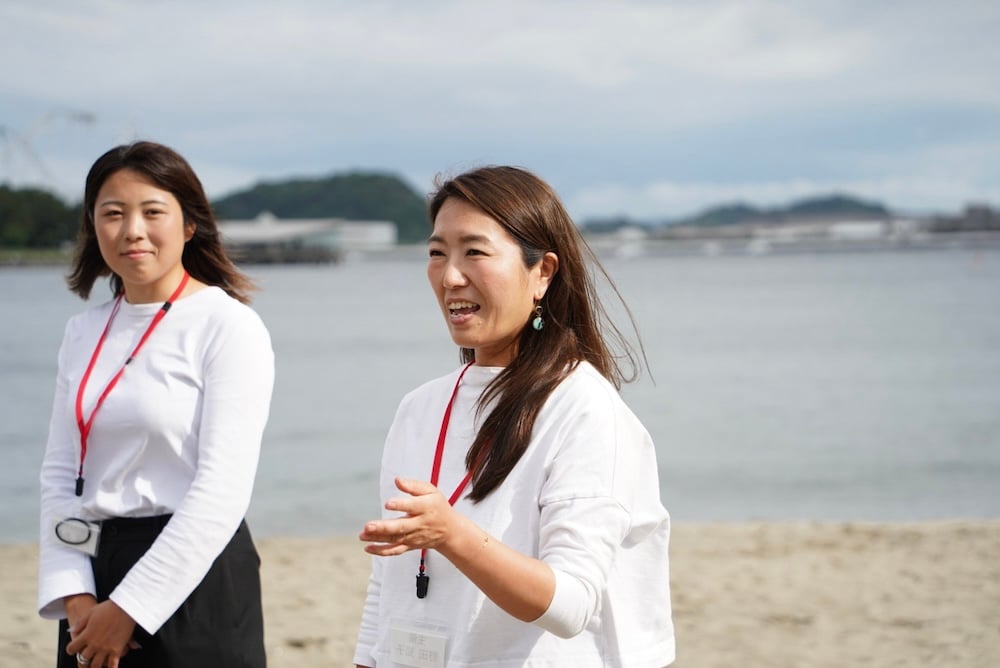
The fieldwork took place on June 15, 2026, under an unfortunately light rain. At the opening of the event, Noda explained the weather-related changes to the program and began speaking with a smile.
“I was born and raised in Kanazawa-Hakkei, and I still live here today. I love this town.”
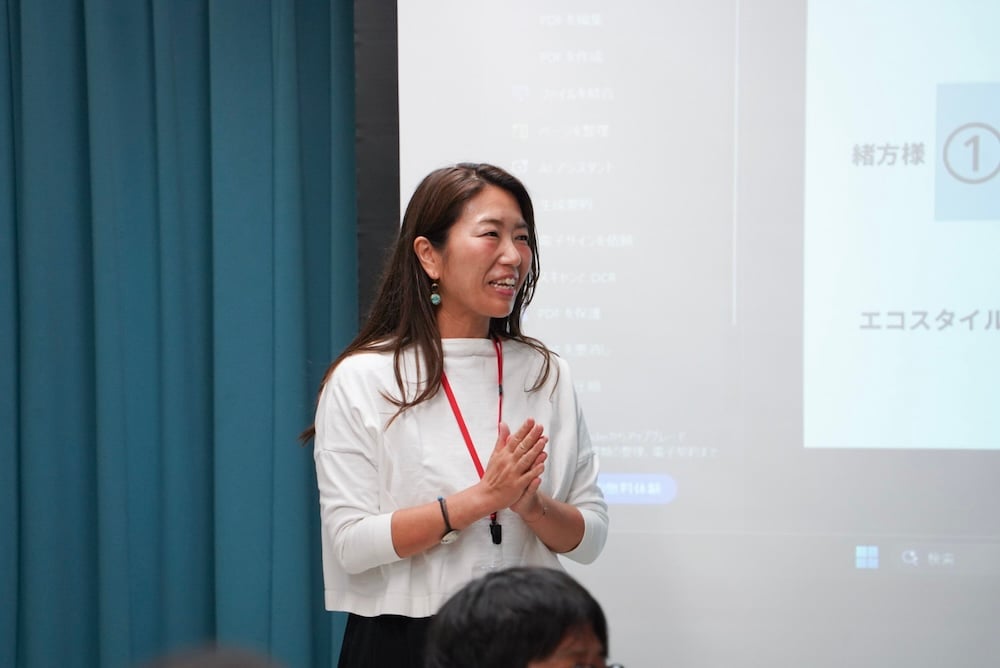
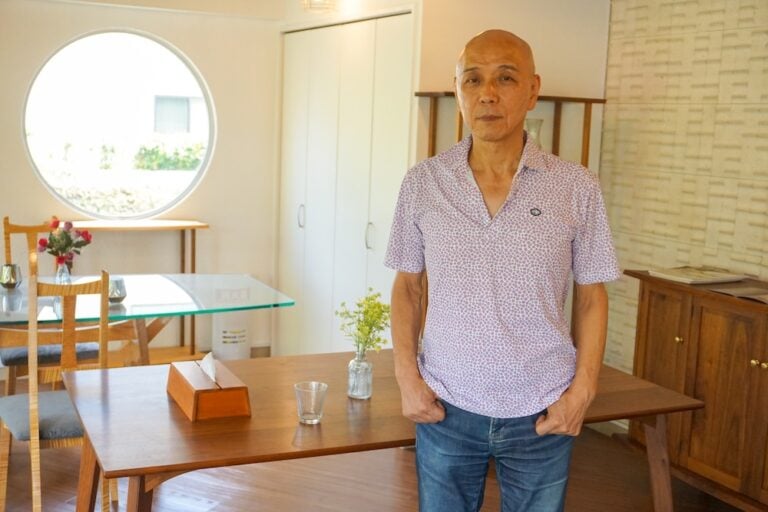
Tomoko Noda (野田友子), representative of Oc&co.
Oc&co.’s mission is to connect people and generate new possibilities. After becoming a mother, Noda carried a desire to take action for her child’s future. Through countless conversations with others, she realized that what she truly wanted was “to increase the number of people who feel that the sea is wonderful.”
“My grandparents were fishermen, so from a young age I was involved in making nori and catching fish — the sea was always very close to me. I couldn’t imagine life without it, and I assumed everyone in Kanazawa-Hakkei loved the sea too.
But that wasn’t the case. There was an outing to Umi no Koen (Sea Park) with my child’s school, and one child caught a razor clam and proudly showed it to their mother, who responded, ‘What is this clam? How do you eat it?’ I thought it was such a shame that, even with the sea so close, there were so few opportunities to come here with children. That’s when I felt a strong desire for the people of this town to know and love the environment they have right here by the sea.”
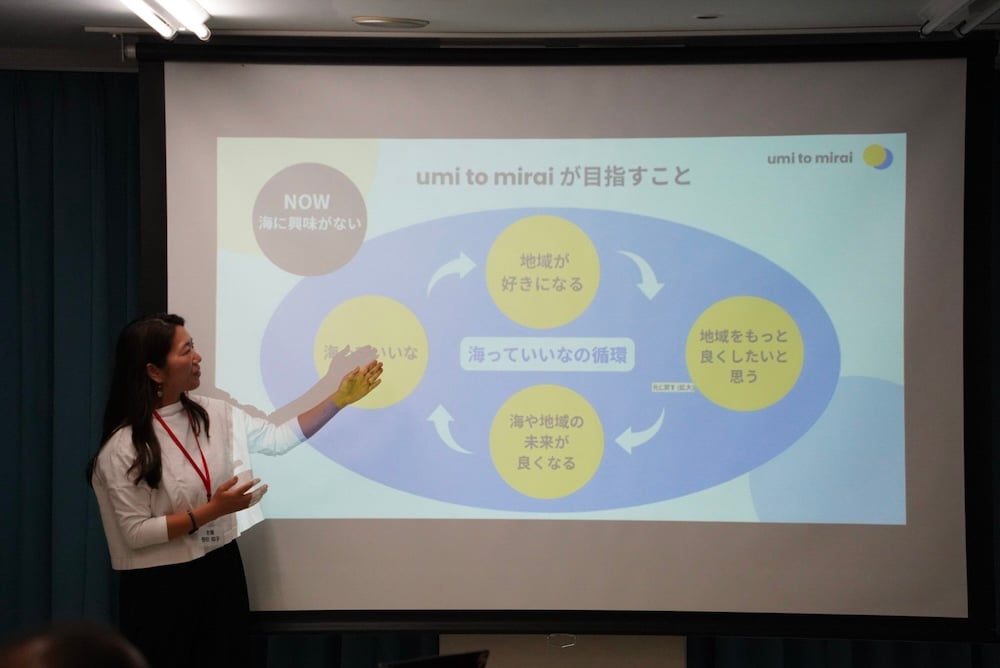
“When more people feel that ‘the sea is wonderful,’ more people start to think that ‘Kanazawa-Hakkei might be a great place,’ and more people want to ‘make this community even better.’ Through that cycle, the sea and the community improve, and the future grows brighter. I wanted to create that cycle — a cycle of ‘the sea is wonderful.'”
“No One Can Save the Planet Alone” — From Kelp to Business Solutions for the Sea
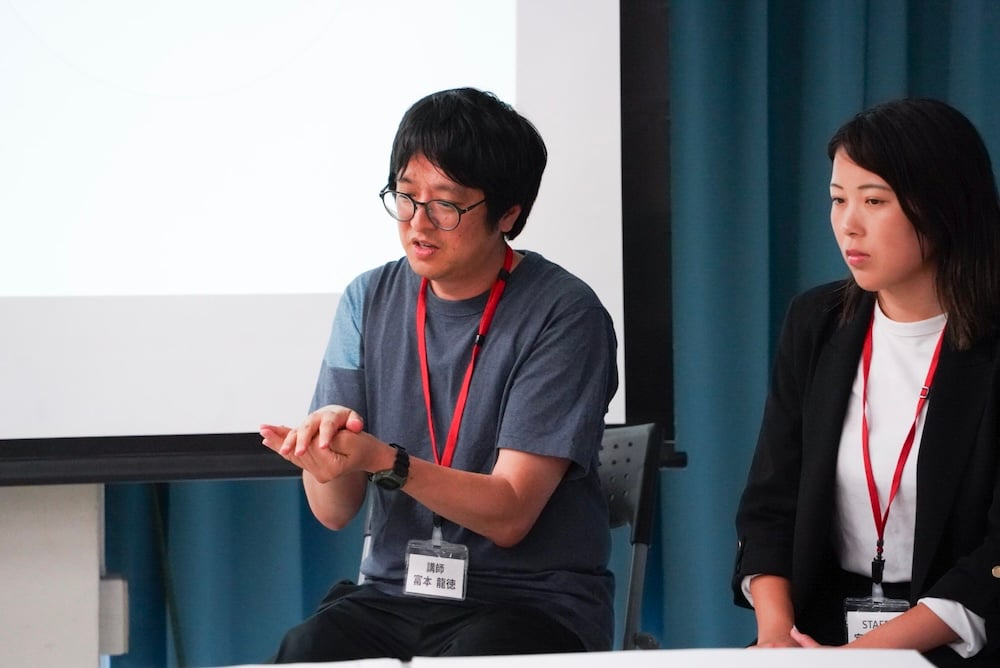
Next to take the stage was Tatsunori Tomomoto (富本龍徳), representative of Sachiumi Heroes LLC. Operating under the mission of “saving the planet with kelp,” he cultivates kombu (kelp) in the waters of Kanazawa Ward and works to turn marine challenges into business opportunities.
“I work with the goal of ‘creating a future for kombu.’ On kombu harvest days, the most remarkable variety of people gathers at the fishing port. Because our approach differs somewhat from traditional fishing, we get advertising agency staff, company presidents, people from overseas, even public bath owners — some days there isn’t a single fisherman in sight (laughs). When I ask myself why so many people are drawn to this, I think it’s because they resonate with the idea of tackling climate change through kombu farming.”
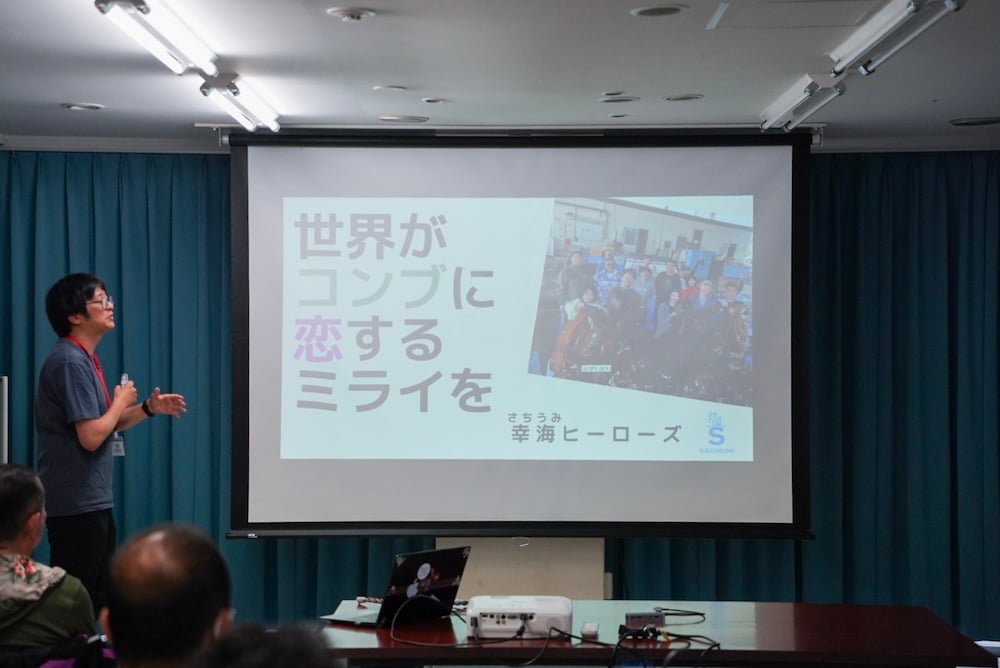
Tomomoto went on to introduce the concept of “blue carbon” — the mechanism by which marine ecosystems such as seaweed and seagrass absorb and store atmospheric carbon dioxide (CO₂) through photosynthesis. Kanazawa Ward was the first area in Japan to obtain blue carbon certification through seaweed, even ahead of Hokkaido. The initiative has drawn a steady stream of overseas visitors and journalists eager to learn about this approach to harnessing the natural power of the sea.
“It wasn’t just kombu — we achieved this together with nori and wakame as well. It really drives home just how remarkable a place Kanazawa Ward is.”
At the same time, a range of environmental challenges are unfolding in the sea. “Green tide” — the mass washing ashore of sea lettuce (aosa) — and “isoyake” (barren ground), the decline of seaweed caused by rising water temperatures, are pressing issues that are already occurring right here in Kanazawa-Hakkei.
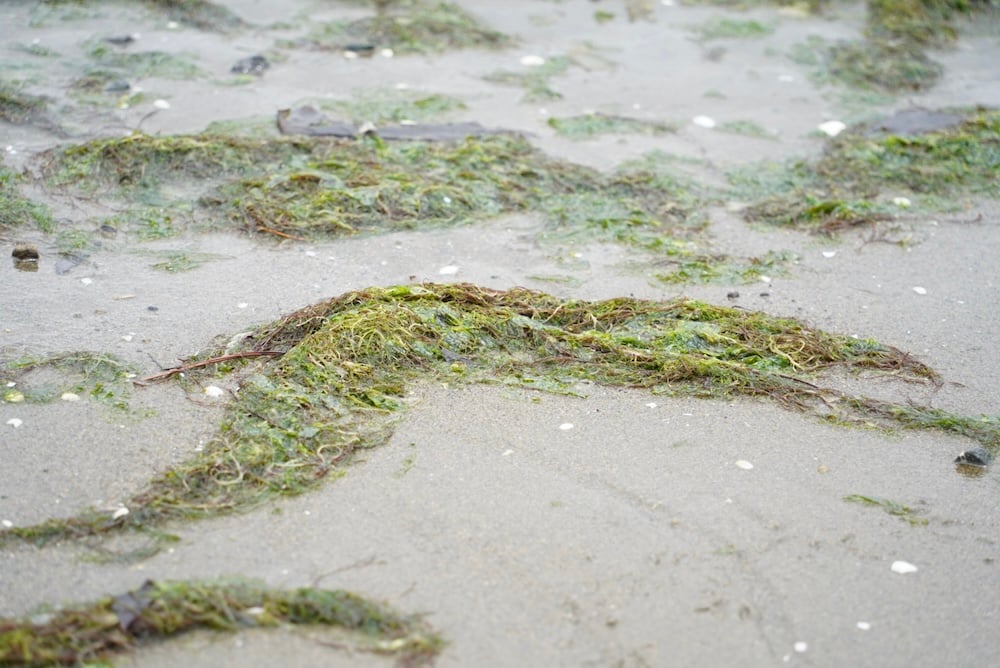
“Isoyake — sometimes called the desertification of the sea — is happening all across Japan. When seaweed disappears, so do the habitats of fish and plankton. Seaweed absorbs carbon dioxide and produces oxygen, so losing it means losing that entire cycle. Even in Hokkaido, kombu production has fallen to roughly one-third of what it was thirty years ago. When I heard a fisherman say, ‘This industry is already in decline,’ I felt a real sense of crisis.”
That is precisely why cultivating kombu holds such enormous potential, Tomomoto explained.
“We now know that kombu can be farmed everywhere from Hokkaido in the north to Kyushu in the south. It is also said to absorb CO₂ at roughly five times the rate of cedar trees. Because it grows in seawater, there is no need for irrigation, fertilizer, or weeding. It is, in fact, an extraordinarily promising resource.”
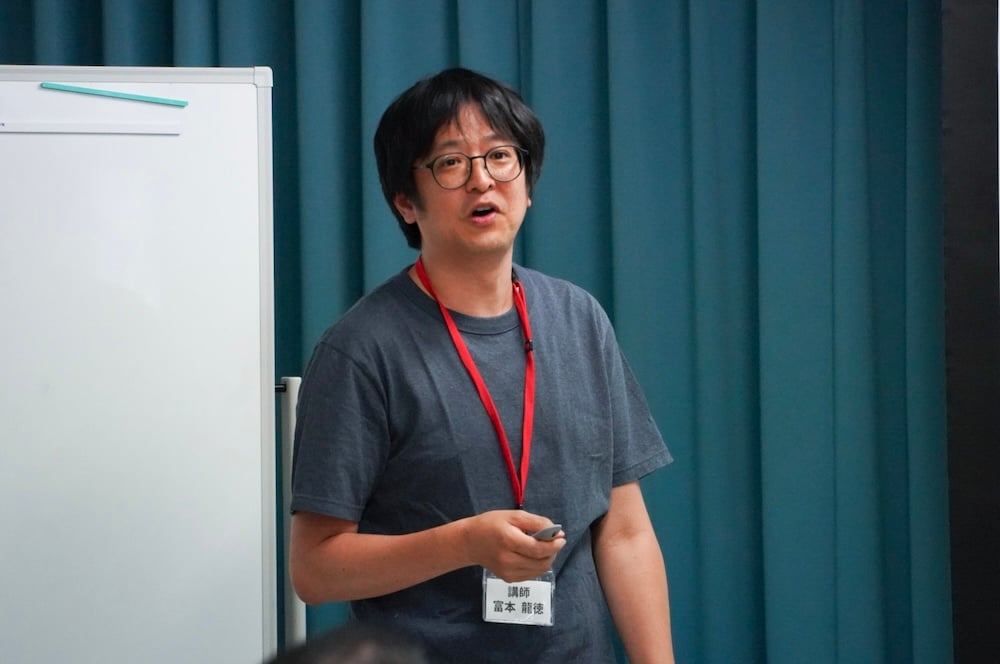
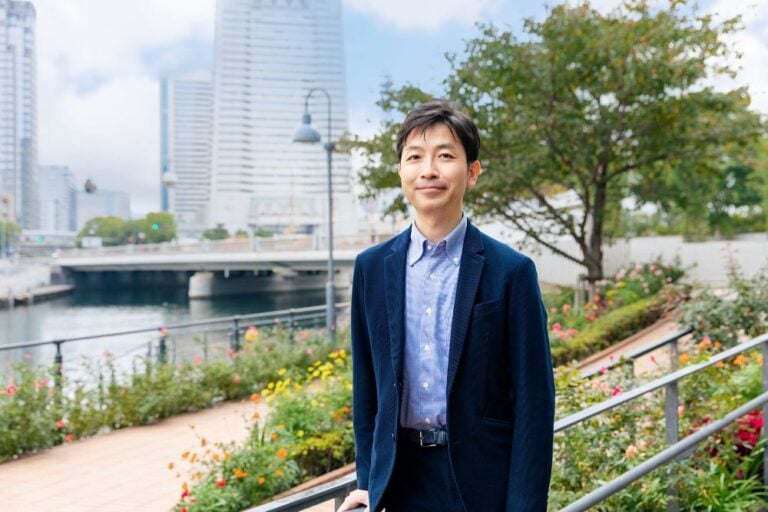
Tatsunori Tomomoto (富本龍徳), representative of Sachiumi Heroes LLC
Kombu farming also provides supplementary income for fishermen during winter, when catches are typically low. Tomomoto’s team actively pursues product development and collaborations with companies from a local production, local consumption perspective.
It all began with “Hama Kombu Ponzu” — a ponzu sauce made with Kanazawa-grown kombu and green mandarin juice from Kanagawa Prefecture, co-developed with Takei Shoten, a shop founded in 1872 (Meiji 5). Since then, partnerships with sustainability-minded companies and organizations have continued to grow: a craft beer called “THE FISH,” developed through an industry-academia collaboration between Yokohama City University students and local companies to pair with sushi and fish; and the adoption of Kanazawa kombu in bath bombs by LUSH, the UK-based natural cosmetics brand.
Further initiatives include a sustainable study tour for high school students organized with Nippon Travel Agency, and “Kombu-yu” (kombu baths) held in partnership with public bathhouses in Tokyo and Kanagawa. The used kombu is then composted as fertilizer to grow tea leaves, which are made into a “Circular Tea” product — ensuring that every part of the kombu is used, and connecting the whole process to education and local resource circulation.
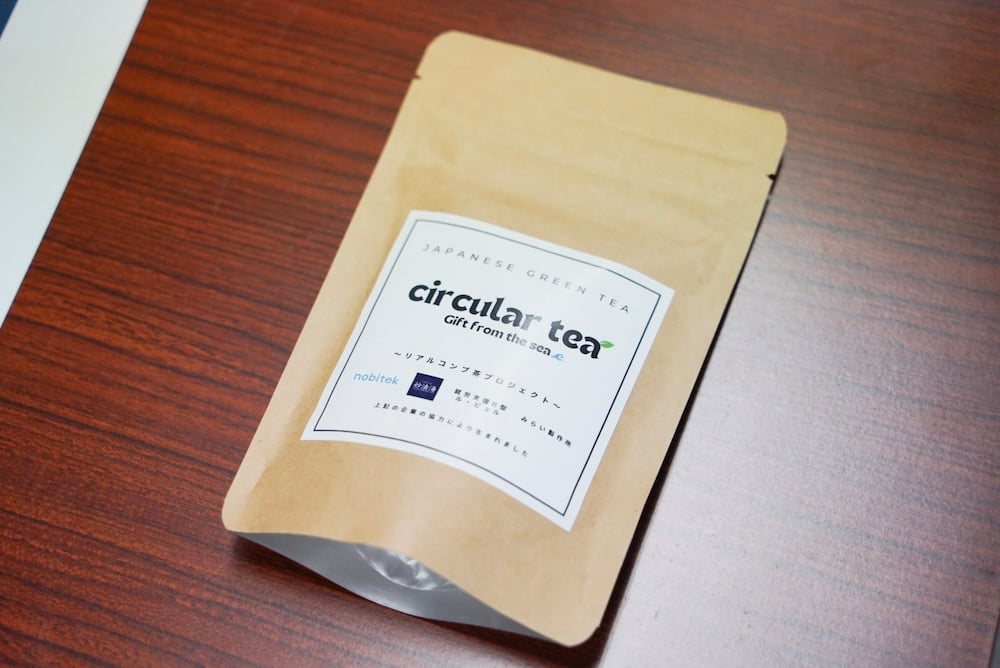
Participants at the venue also received take-home gifts of “Circular Tea” and bath salts
“What I often say is that ‘no one can save the planet alone.’ That’s why I involve as many people as possible and run all kinds of projects. I’d like to ask you just one question: can you say with confidence that you can hand this environment on to the next generation? I hope you’ll spend today thinking about whether there is anything you do in your daily life for nature. Let’s think together about what we can do starting tomorrow, and take action.”
Changes in Yokohama’s Sea, as Seen from Umi no Koen
Next, Fumikazu Matsuoka (松岡文和), director of the Umi no Koen Management Center, took the stage to introduce the history of Umi no Koen (Sea Park) and the environmental changes taking place in Yokohama’s waters.
Umi no Koen covers 460,000 square meters — roughly the combined area of all the elementary school grounds in Kanazawa Ward and Isogo Ward. Today the park welcomes approximately 2.5 million visitors a year, but before it opened in 1988 (Showa 63), the site was open sea.
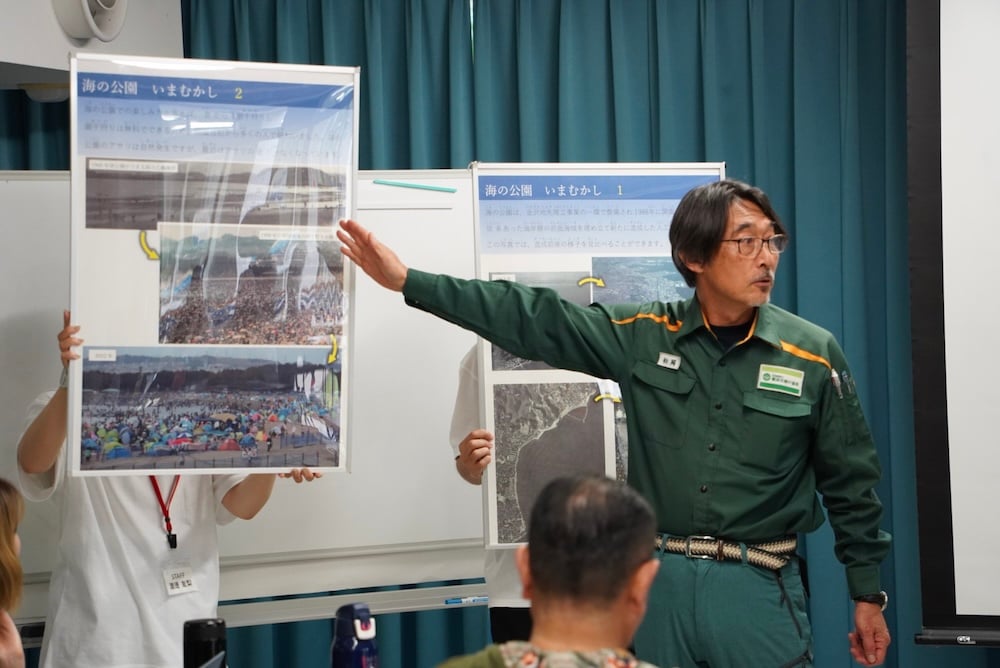
Fumikazu Matsuoka (松岡文和), Director, Management Division, Management Section, Umi no Koen Management Center
“This park was built on reclaimed land. Even the sandy beach was not naturally occurring — it was created by transporting mountain sand from Chiba Prefecture. During Japan’s period of rapid economic growth, industrial land development expanded and places where people could enjoy the sea diminished. Umi no Koen was developed as a replacement for those lost spaces.”
Today, on peak days during the Golden Week clam-digging season, the park receives more than 30,000 visitors in a single day. Yet even here, environmental changes are making themselves felt.
“Asari clams have become increasingly difficult to find. The primary cause is rising seawater temperatures due to global warming. Around September, after the summer heat, the population drops sharply. After the Obon holiday, we have sometimes found the shoreline piled with the shells of tiny dead clams, like a shell midden.”
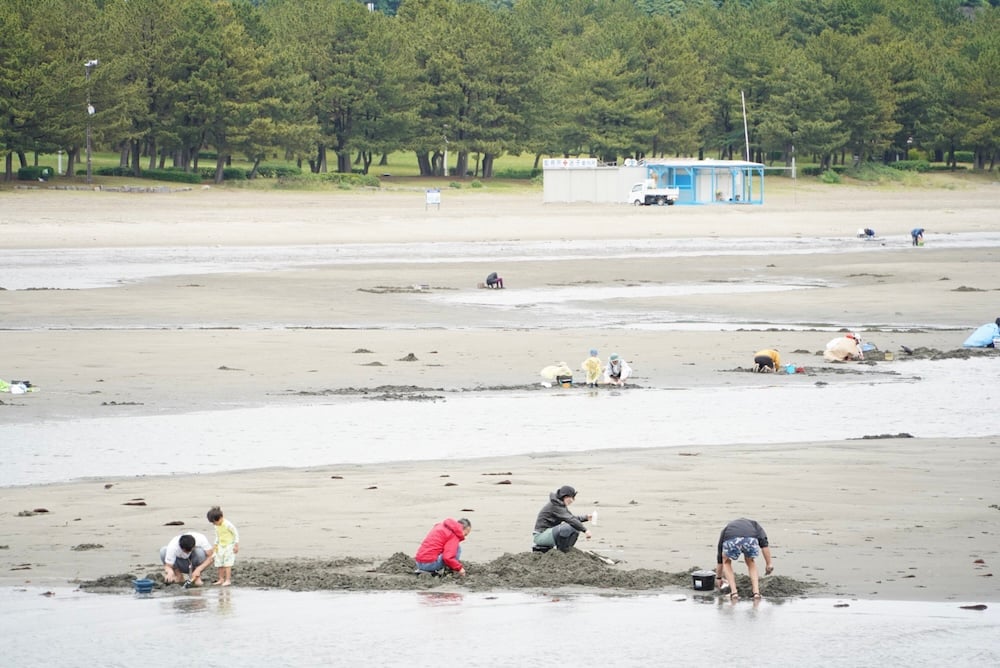
Visitors enjoying clam digging at the park
Matsuoka also addressed the issue of litter in the park. Visitors often remark that Umi no Koen has very little rubbish, but behind that impression lies the daily cleaning efforts of local residents and volunteers.
“There are many people who pick up litter as a matter of routine — some do it on their morning walks or after radio calisthenics, and one person walks the entire one-kilometer shoreline for two hours every day to clean it. Among those of us involved with the park, we often say ‘litter attracts more litter.’ That’s why it’s so important to keep reducing it consistently.”
He also explained that much of the plastic bottles and polystyrene found on the beach has washed in from the sea.
“After a typhoon, litter that has been sitting on the seabed gets washed ashore all at once. In other words, a great deal of invisible rubbish remains beneath the surface.”
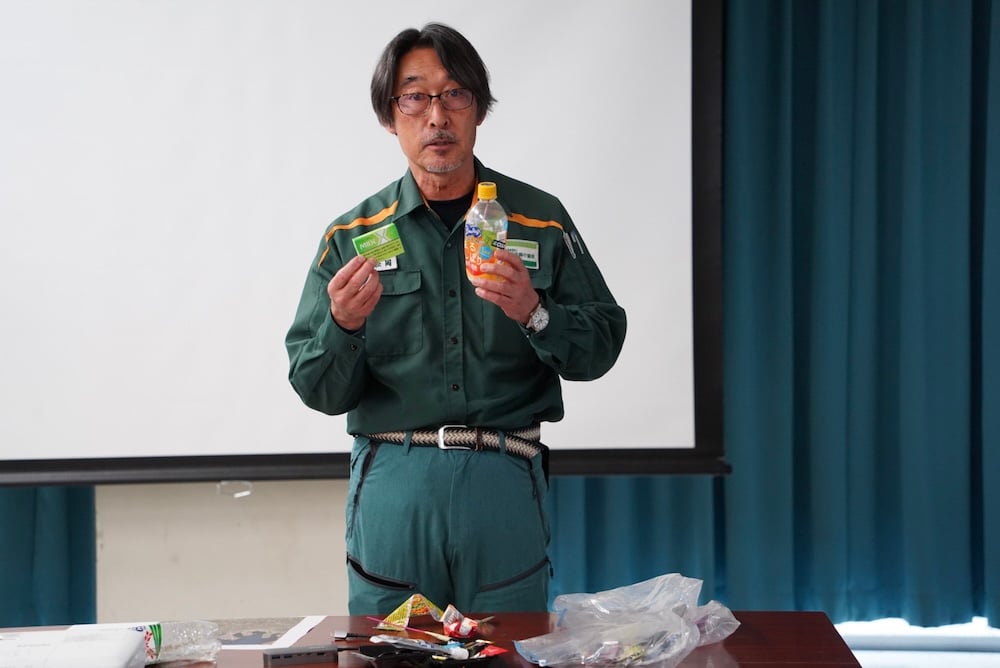
Matsuoka further noted that “the marine environment does not sustain itself in isolation.”
“There is a saying that ‘the mountains nurture the sea.’ Yokohama retains a great deal of green space, and the nutrients from those forests flow through rivers into Tokyo Bay. Approximately sixty rivers empty into Tokyo Bay, and it is thanks to them that such a rich fishing ground — rare for an urban area — has been able to flourish.”
In recent years, however, the effects of global warming have begun to alter the marine ecosystem.
“Ten years ago, around 36 species of fish were identified in this area; today that number has risen to 41. However, the species that have increased are those native to warmer, southern waters. Rising sea temperatures are thought to have allowed these southern species to establish themselves here.”
Matsuoka closed by urging participants to recognize that marine litter is not solely a problem of the sea — it is intimately connected to each of our daily lives.
“Much of the litter that washes up on our shores originated in the towns where we live, carried here by rivers. Government bodies, businesses, volunteers, and many others continue working to keep the sea clean, but it is equally important for each individual to develop an awareness of the environment. Protecting the marine environment is also an invitation to reflect on the way we live.”
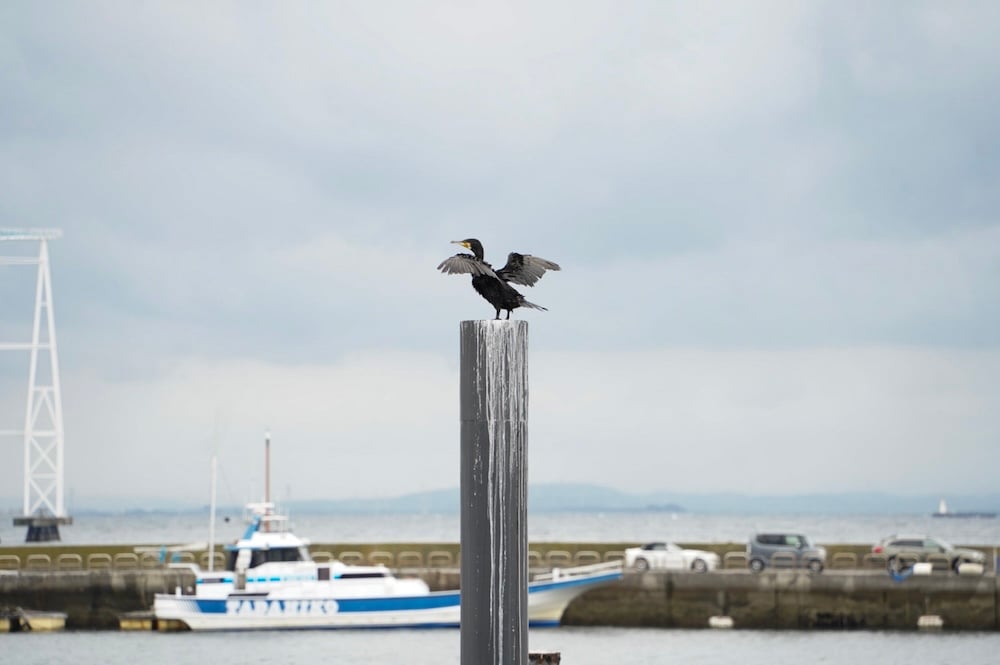
With Their Own Hopes in Their Hearts, Out to the Waters of Kanazawa-Hakkei
After Matsuoka’s talk, each of the 15 participants introduced themselves in turn. Their backgrounds were diverse — community activists living in Kanazawa Ward, a Yokohama City Council member, a business owner running a design school in Tokyo, and more. They shared their reasons for joining the program and their personal connections to the sea: “I’m concerned about the succession crisis in fishing and rising sea temperatures,” and “I want us all to think about this together and pass it on to our children.”
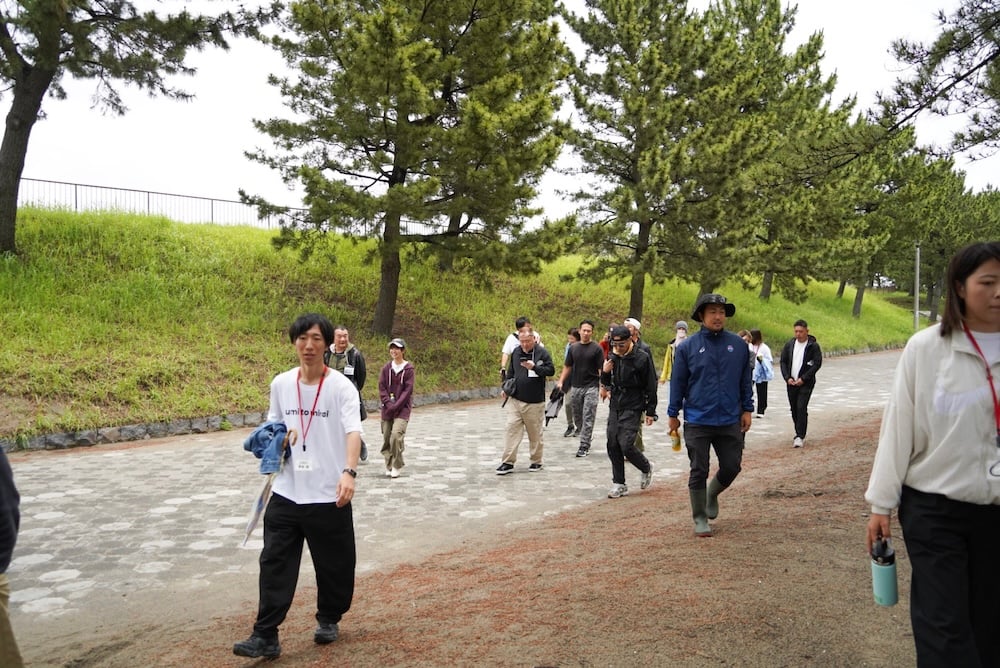
As people got to know one another and conversation began to flow naturally, patches of blue sky gradually appeared overhead. Seizing the break in the weather, the group set off along the beach toward the fishing port.
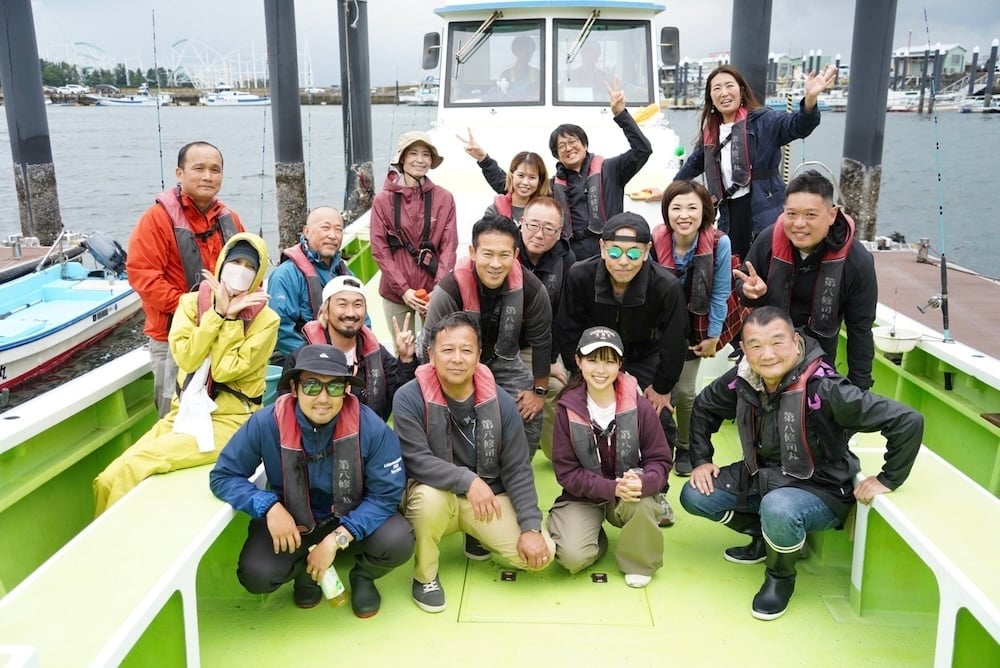
They boarded the fishing boat Shuji-maru and headed out to sea.
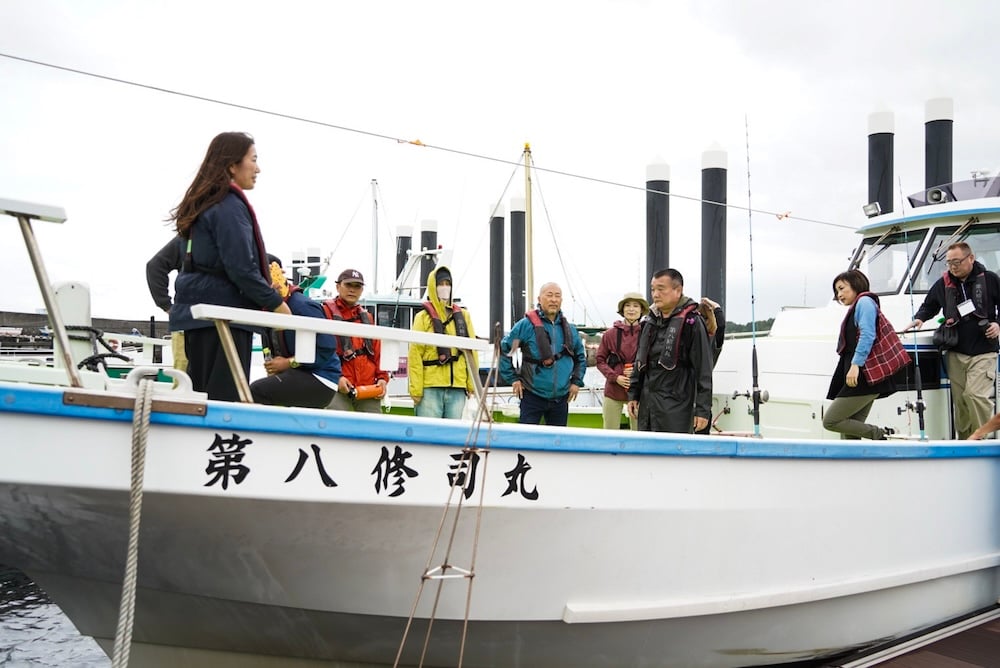
The kombu farm that Tomomoto had described sits directly beneath the marine roller coaster at Hakkeijima Sea Paradise. After circling the area, the group moved on to the fishing experience.
The post-rain sea was somewhat windy, with waves running a little higher than usual. Some participants were splashed by sea spray on deck, but there were moments of laughter too — “Nature isn’t always calm, is it?” The relaxed, open expressions on participants’ faces, standing before the natural world rather than in a classroom, were striking.
The boat came to a stop, and the long-awaited fishing session began. From those who baited their hooks with practiced ease to those casting a line for the first time since becoming parents, everyone dropped their lines into the water at once.
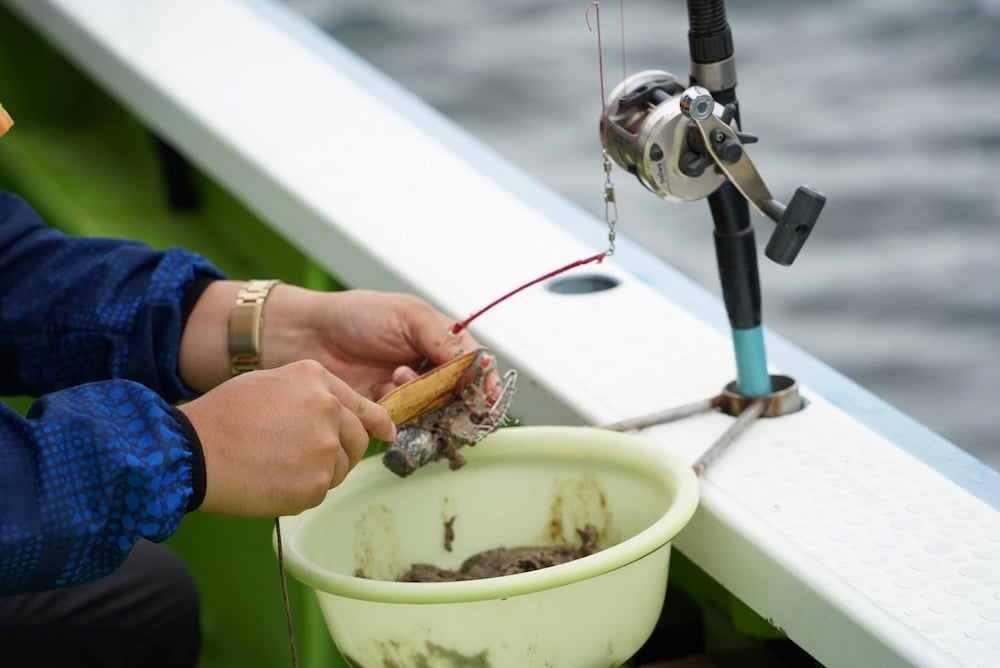
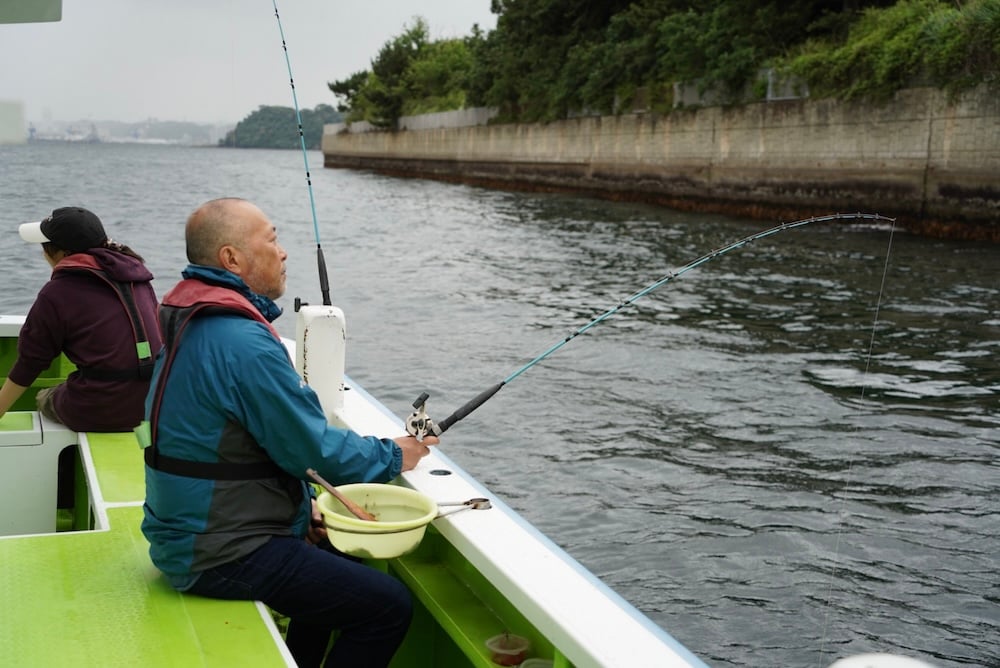
At first, participants wore expressions of quiet concentration, as if immersing themselves in the sensation of being alone with the sea. They gazed intently at the water’s surface, waiting in silence for a bite.
Before long, cries of “I caught one!” rang out from all directions, and smiles broke across faces. Each catch was met with cheers, and even strangers found themselves naturally falling into conversation.
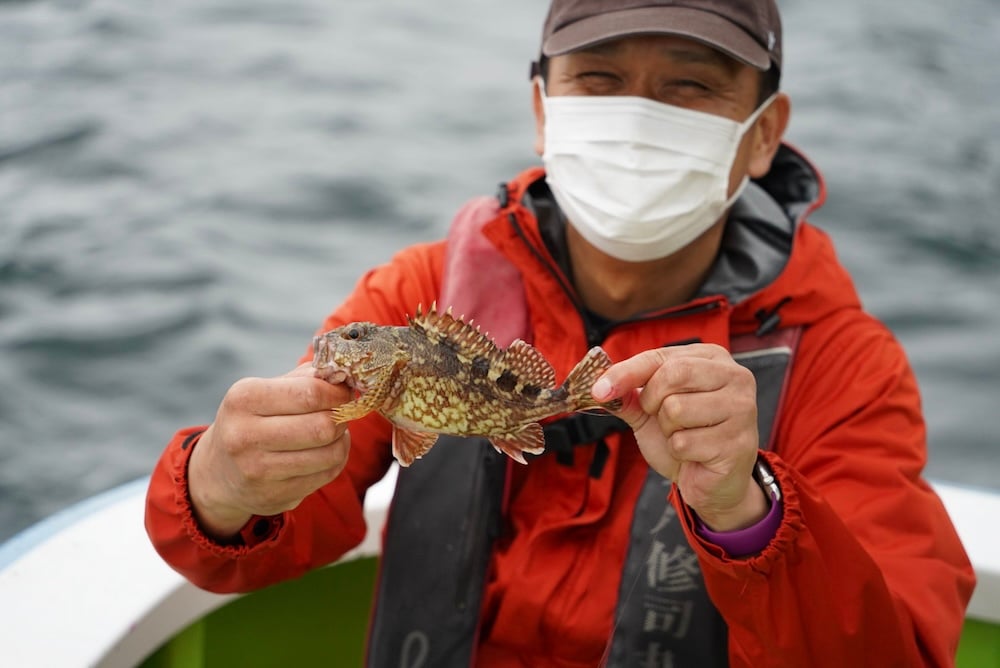
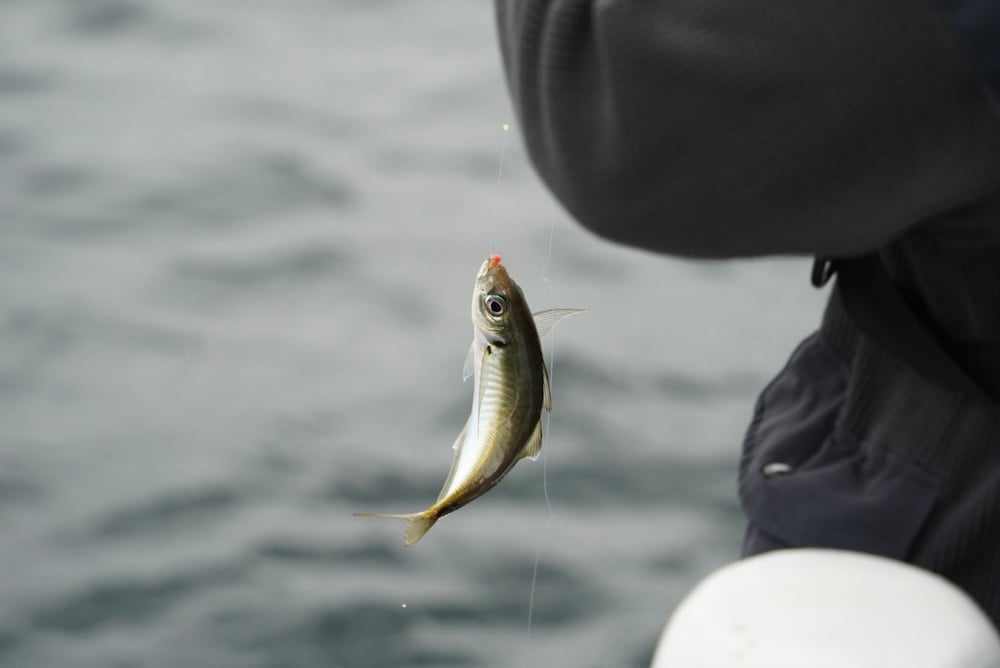
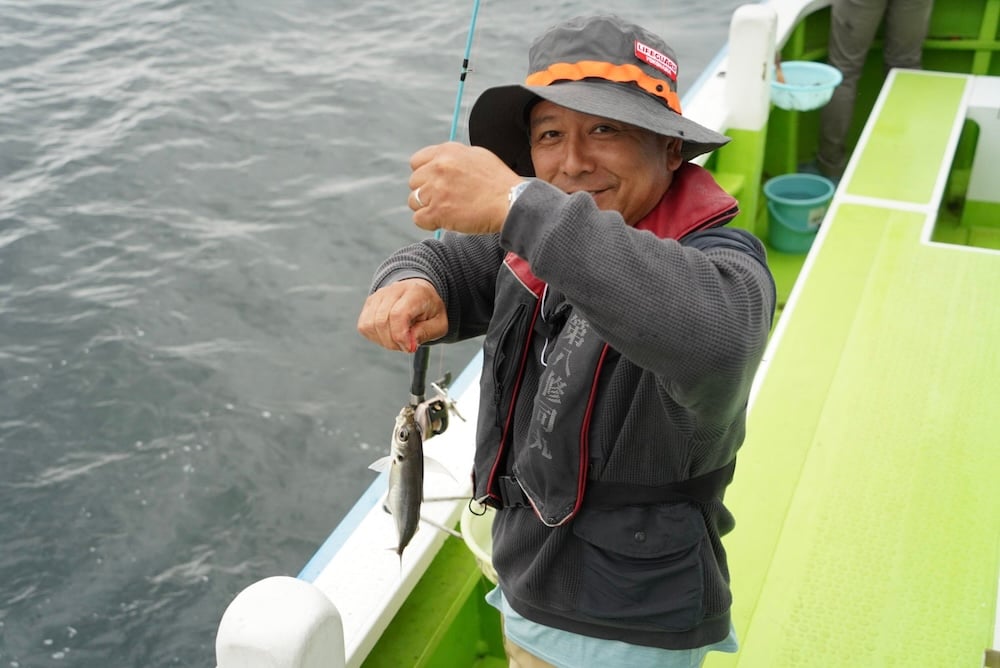
During the fishing session, while each person savored their own time with the sea, there were also moments when those nearby helped someone whose line had become tangled. In the midst of this carefree, childlike absorption, the distance between participants gradually closed and new lateral connections began to form. Nature — the sea above all — may have a quiet power to gently bring people together and spark new encounters and conversations.
Bridging the Distance from the Sea: Approaches from Every Perspective
Reluctantly leaving the sea behind, participants returned to shore. After lunch — bento boxes featuring tachiuo (largehead hairtail), an underutilized fish — a cross-talk session was held with Noda, Tomomoto, and Ami Miyazawa (宮澤あみ), a video creator.
Opening with the question “What did you discover at the sea today?”, the conversation ranged across themes such as “How do we bring more people on board?” and “How do we get people to care about the sea?” — with each speaker sharing their perspective.
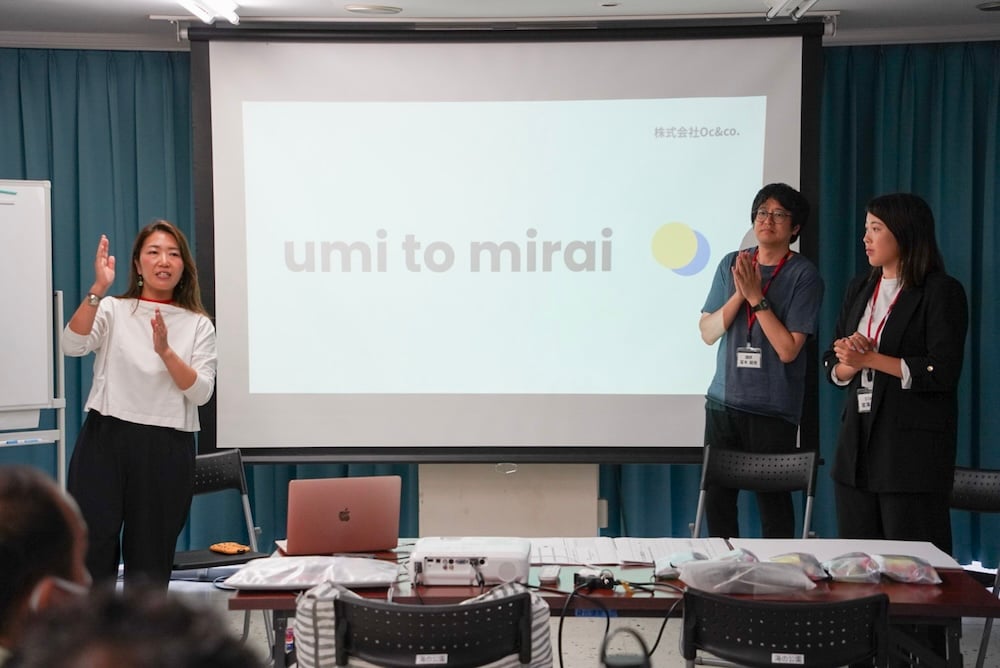
Tomomoto noted that environmental issues tend to feel heavy and off-putting, which is precisely why “making them approachable first” is so important.
“For example, I coined the term ‘OX (Ocean Transformation)’ by analogy with DX, and I called our kombu ambassadors ‘Kombasadors.’ I’m always conscious of translating what we do into names that make people think, ‘That sounds fun’ or ‘That sounds interesting.'”
Citing the public bath initiative as an example, he reflected that “it spread not from Kanagawa but from Tokyo’s public baths, where the culture of rotating daily bath additives was already established,” adding: “If something isn’t working, it’s worth shifting your perspective or your market slightly. Thinking carefully about who to involve can sometimes lead to rapid growth.”
Miyazawa, a former member of Japan’s national lifesaving team who has competed in world championships, spoke about how her own experience informs her current work.
“The number of people who come to play at the sea, and the number of people involved with the sea, are both declining. That’s exactly why I want to use video and fieldwork like this to multiply the small points of contact that help people feel the sea is close to them.”
She also reflected that “there are things only someone who has actually experienced something can convey,” sharing: “Because I’ve continued with lifesaving, I feel there is a perspective that only I can offer.”
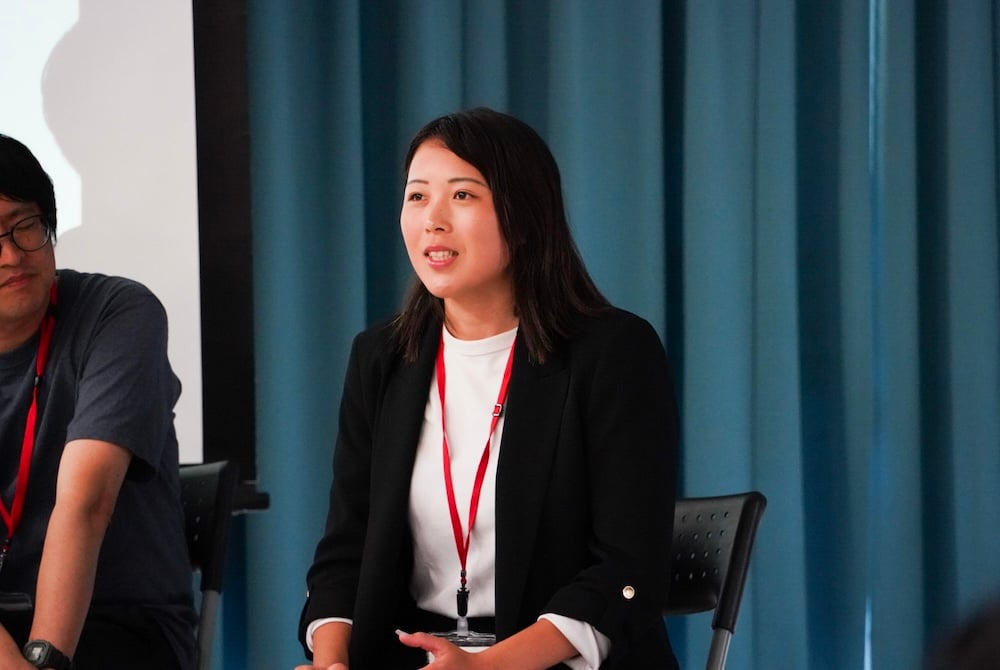
Video creator Ami Miyazawa (宮澤あみ)
Tomomoto closed the session by saying that “what matters is creating an atmosphere where people want to join in — not the kind of relationship built on exchanging business cards in suits,” and that he wants “to lower the barriers in people’s hearts and create opportunities for them to want to get involved on their own terms.”
Hints Lie in What Cannot Be Seen: Turning Insights from the Sea into Action
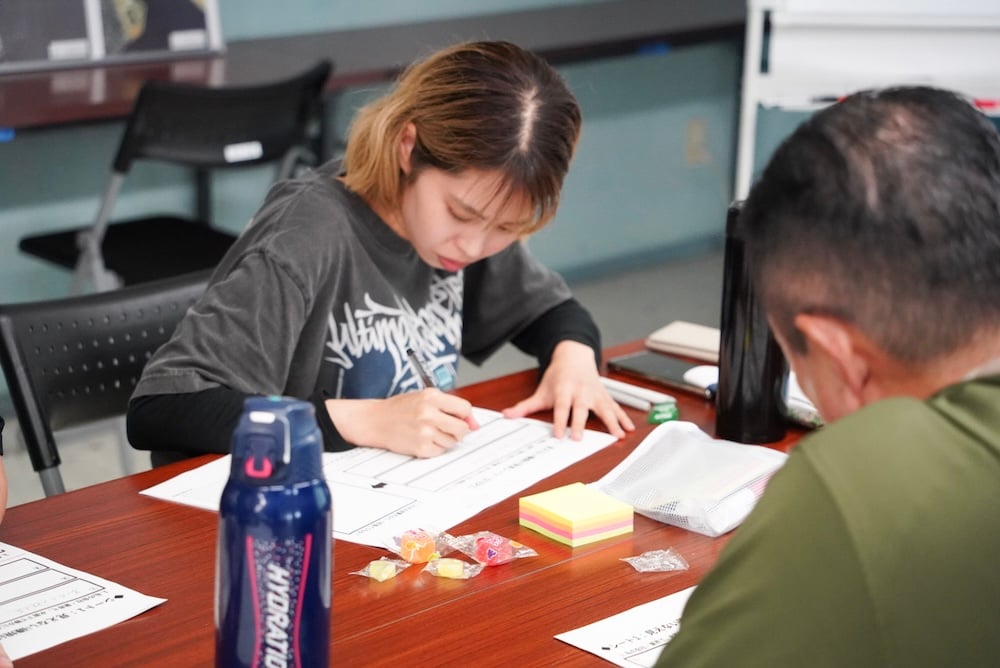
Next, participants split into groups for a workshop. Drawing on what each person had felt at the sea, they considered the question: “What can I — or my organization — do about the challenges facing the sea?”
Facilitator Futoshi Takashima (高島太士), representative of the incorporated association NEWHERO, introduced the concept of “problem reframing” using Sachiumi Heroes’ work as an example, presenting three keywords: “discover,” “expand,” and “involve.”
“They’ve transformed kombu into all kinds of businesses. The way they identified the opportunity was excellent, and the way they expanded it into a wide range of products was equally strong. And throughout, they gathered people who shared their vision. Those three elements are the key.”
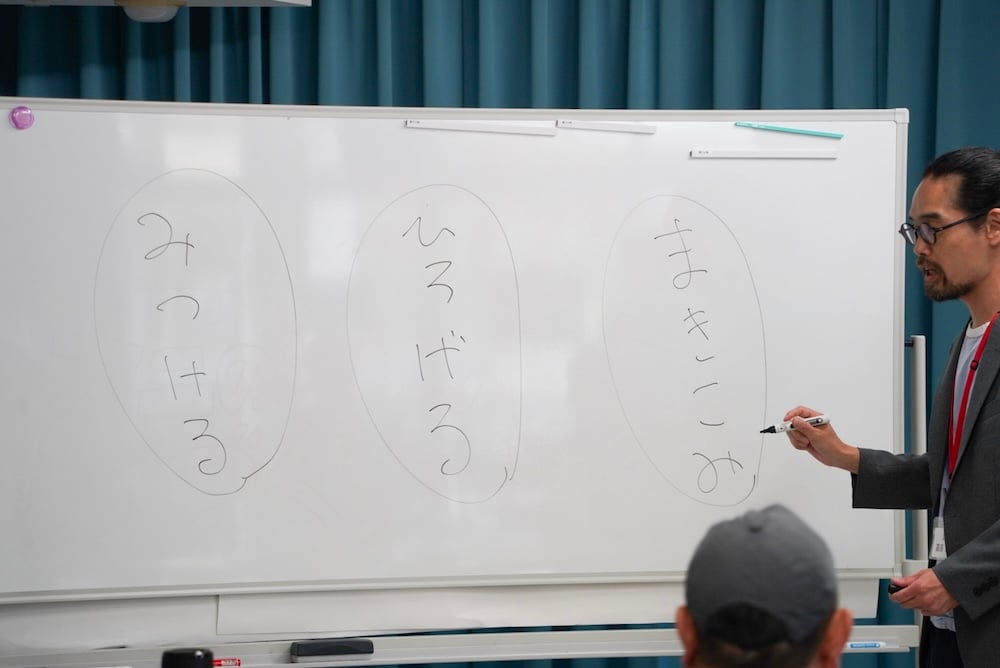
Futoshi Takashima (高島太士), representative of the incorporated association NEWHERO
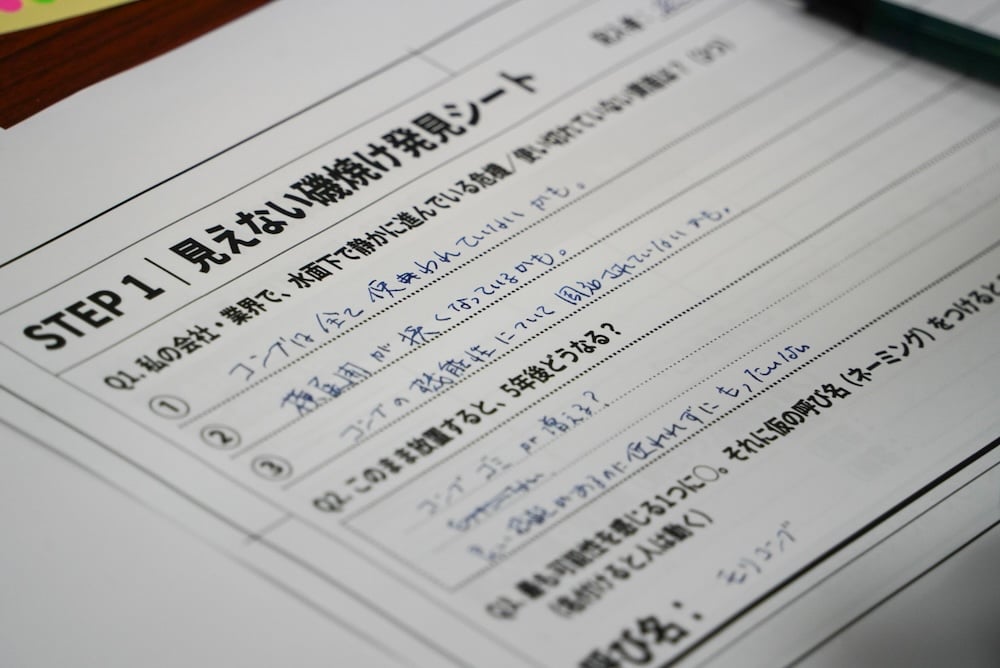
Participants were handed a worksheet headed “STEP 1: Invisible Isoyake Discovery Sheet.” Turning their attention to their own companies and industries, they engaged with the following prompts:
“What crisis is quietly advancing beneath the surface in your company or industry?”
“What assets are you currently discarding or failing to fully use?”
“If left unaddressed, where will things stand in five years?”
After writing down their answers, participants shared their sheets within their groups, discussing the challenges in their respective industries and companies and the insights they had gained. In the process of thinking through these challenges, some found it difficult to keep the focus outward: “I keep turning the arrow back toward myself rather than toward social issues.”
Through ongoing dialogue, and drawing on Tomomoto’s earlier point that “naming something moves people,” participants gave names to whichever of their ideas held the most potential.
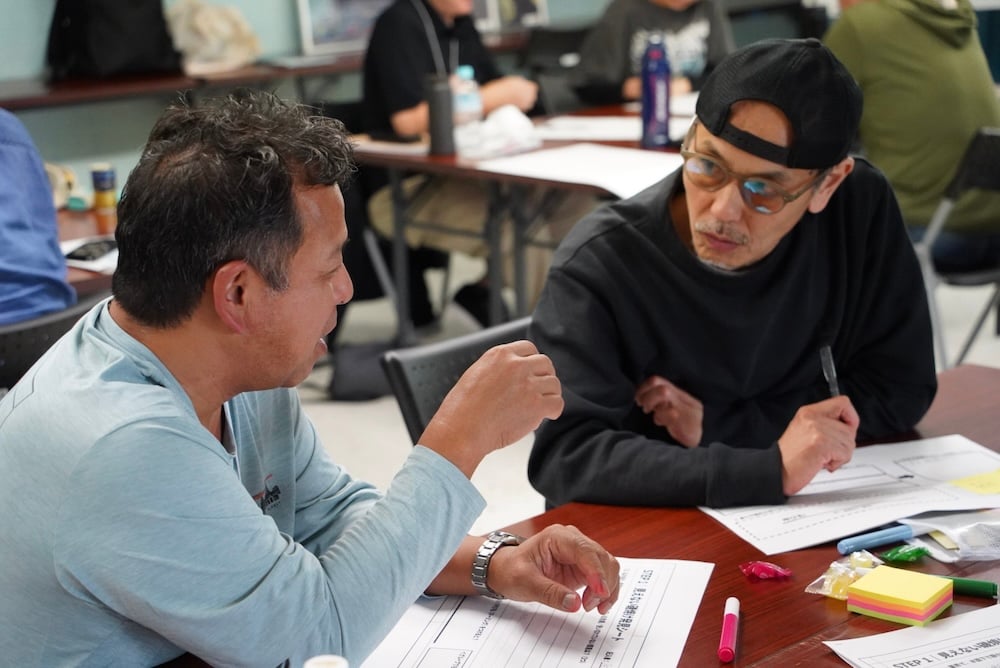
STEP 2 was the “Industry Transformation Matrix.” Participants plotted their company’s resources and discarded materials on the X-axis, and industries such as food, beauty, healthcare, wellness, and education on the Y-axis, then considered from multiple angles: “In this industry, who would want this?” From there, they explored the viability of three new applications, revenue streams, or customer segments. Working within a limited timeframe, participants thought hard about their ideas.
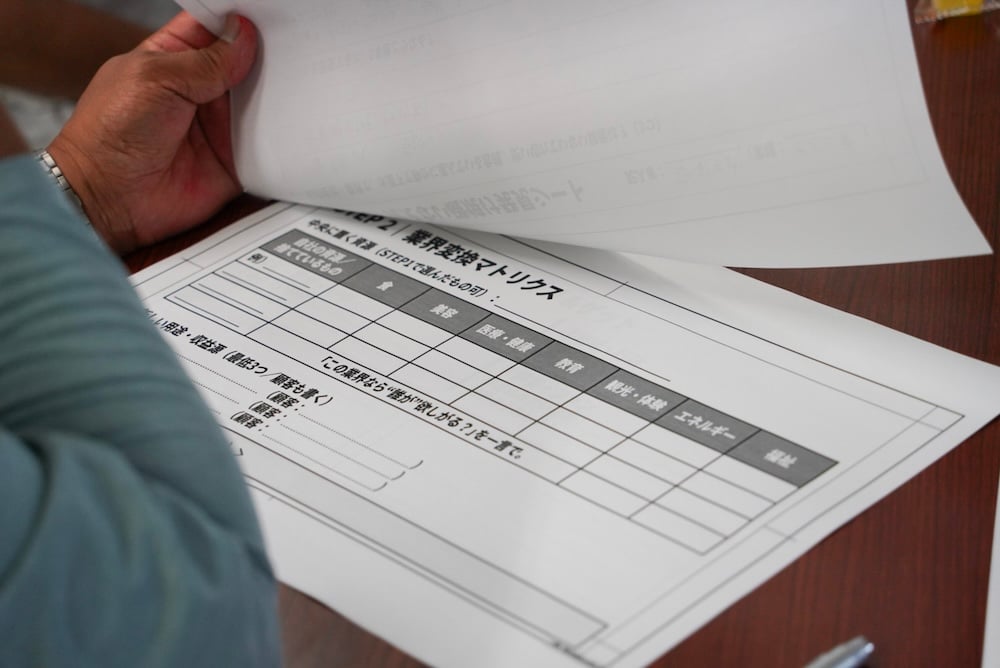
STEP 3 was the “Accomplice Map & Give & Get.” From four perspectives — companies in other industries, local community and government, welfare/education/NPOs, and customers/fans — participants mapped out “who they want to involve” and “what would make that person happy.” The sheet also included columns for what each person could offer (Give) and what they wanted in return (Get), prompting them to put into words things they had previously only thought about vaguely.
Finally, each group presented the ideas generated in the workshop. Starting from insights gained at the sea, reframing their own organizational challenges through a fresh lens, and thinking through the possibilities of cross-industry collaboration — the session appeared to leave each participant with concrete hints for their next steps. In every presentation, one could sense a genuine desire to take the day’s experience personally and channel it into new endeavors.
New Connections Forged by the Sea
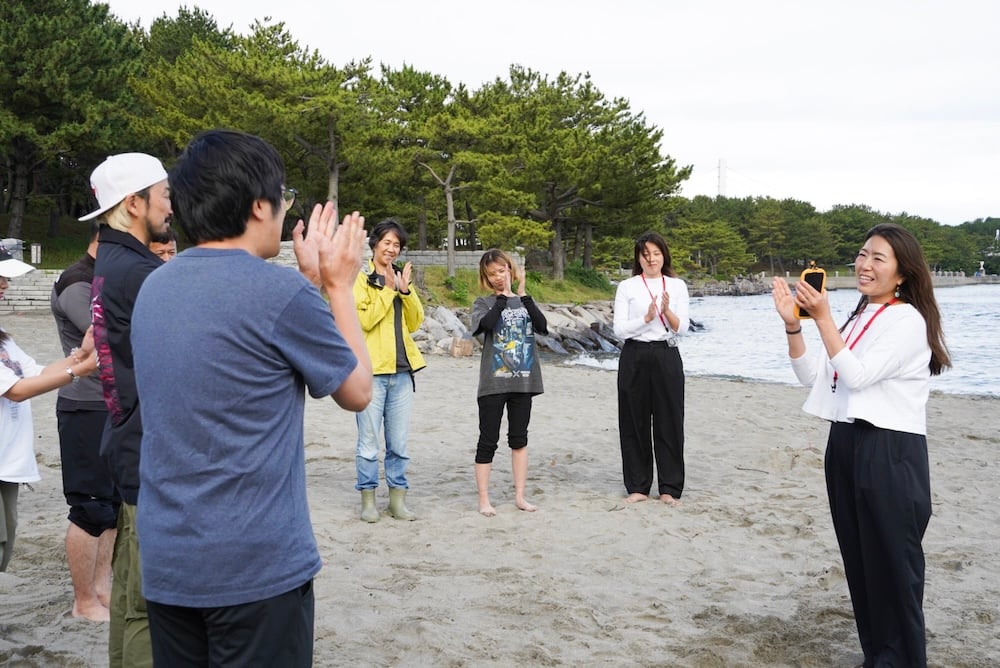
After the workshop, participants returned to the sea for the closing. The sky that had been overcast in the morning had begun to open up with patches of blue, and someone laughed: “I think even the rain at the start had its meaning.” Staff and participants alike took off their shoes, going barefoot on the sand. Having come to know one another through the fishing experience and the workshop conversations, everyone’s faces seemed softer, and a calm, unhurried atmosphere settled over the group.
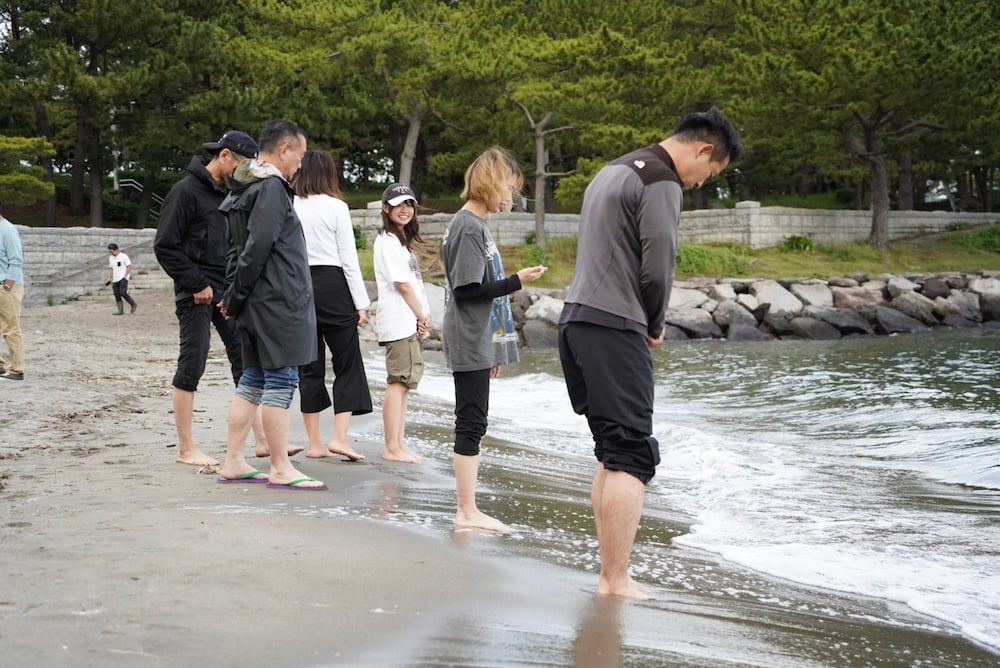
To close, everyone gathered in a circle and shared their reflections on the day.
“It was genuinely enjoyable to experience this firsthand, and it was meaningful for me personally. I hope we can continue to support one another through the connections we’ve made here.”
“I now have a new goal: to create another business.”
Though they live in different towns and work in different fields, these participants shared the same sea on the same day and built something through conversation. The connections formed here felt less like a one-day encounter and more like a first step that would carry each person forward into their next action.
This summer, Oc&co. plans to hold a fieldwork program for children, as well as to exhibit at the Kanazawa Bunko Arts Festival, to be held at Umi no Koen in late September. Around February next year, when the kombu harvest reaches its peak, a fieldwork program targeting businesses and executives is also planned.
It remains to be seen what form the new encounters and co-creation sparked by the sea will take in each participant’s community and work. We look forward to watching how this story unfolds.
Reporter’s Note
I have lived in Yokohama for about six years, but this was actually my first time experiencing the waters of Kanazawa-Hakkei. Even on a weekday afternoon in light rain, I was struck by how many people were out digging for clams — a reminder that the place I call home still has many faces I have yet to discover.
What stayed with me most from this fieldwork was the realization that “the challenges of the sea” are not the exclusive concern of those who work with the ocean — they are intimately connected to each of our lives and livelihoods. Nature does not bend to our will, and it is precisely because of that unpredictability that going somewhere in person, and encountering the people, creatures, and rhythms of life in a place, opens up landscapes that cannot be seen any other way.
Even as digitalization and generative AI continue to advance, the insights gained by observing, feeling, and conversing with all five senses in a real place may be a form of value that only human beings can create. The three perspectives introduced in the workshop — “discover,” “expand,” and “involve” — are ones I intend to carry with me in my own work and daily life going forward.
Footage from the fieldwork is also available on the umi to mirai YouTube channel. It captures the atmosphere of the day and the participants’ reactions in ways that words alone cannot convey, so if you are curious, please take a look.
【Reference】umi to mirai
【Related Article】【6/15】Fieldwork Event: “Turning Marine Challenges into Future Projects” Set in Kanazawa-Hakkei
【Related Article】A Study Tour on Yokohama’s Decarbonization Initiatives, Hosted for National Sun Yat-sen University, Taiwan [Event Report]
【Related Article】Sachiumi Heroes: Protecting and Nurturing the Sea Through Kombu Farming