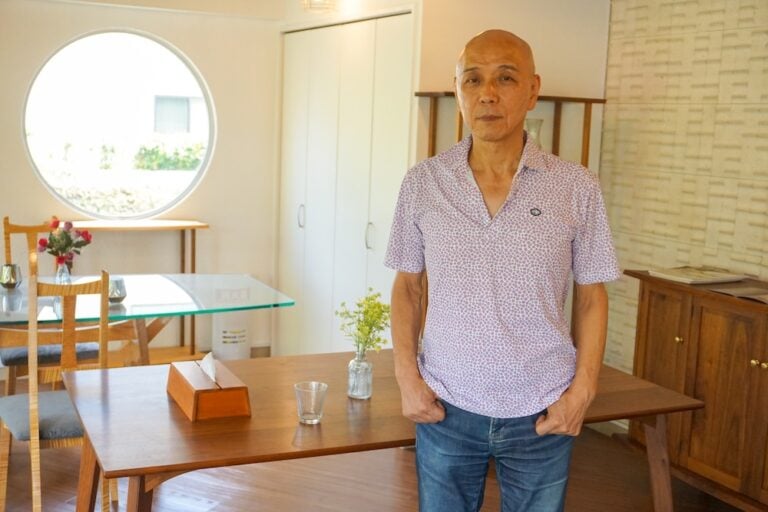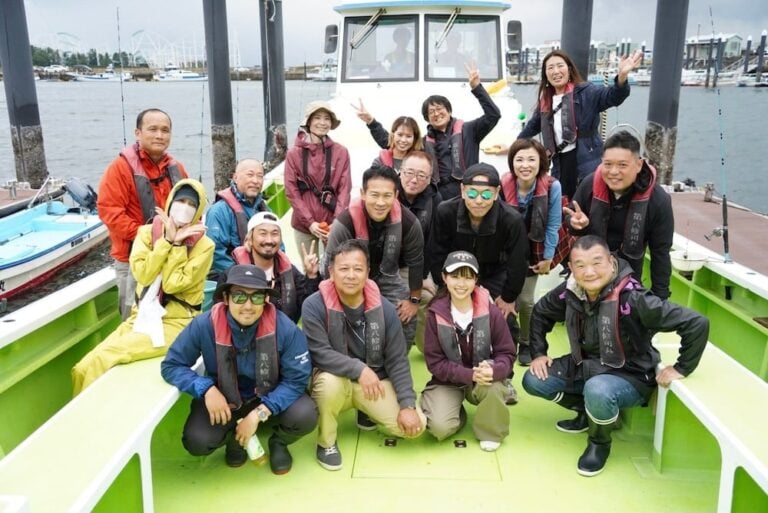
Sponsored by 横浜市
The global transition to a circular economy is accelerating. In Europe, top-down regulatory frameworks have led the way, and Amsterdam’s circular strategy drew international attention, rapidly spreading the concept of the “circular city” around the world.
Across Europe, where entire regions are embracing the circular economy, cities are strengthening their solidarity through frameworks such as the European Circular Cities Declaration. But what about Asia?
In November 2025, the “Asian Circular Cities Declaration (ACCD)”—an Asian counterpart to such city-level declaration frameworks—was born from an initiative by the City of Yokohama. With ICLEI Japan, the Japanese office of the international organization representing more than 2,500 local governments worldwide, serving as its secretariat, the framework launched with Yokohama’s signature and has since grown to include 26 cities across 7 countries, representing a combined population of over 57 million people.
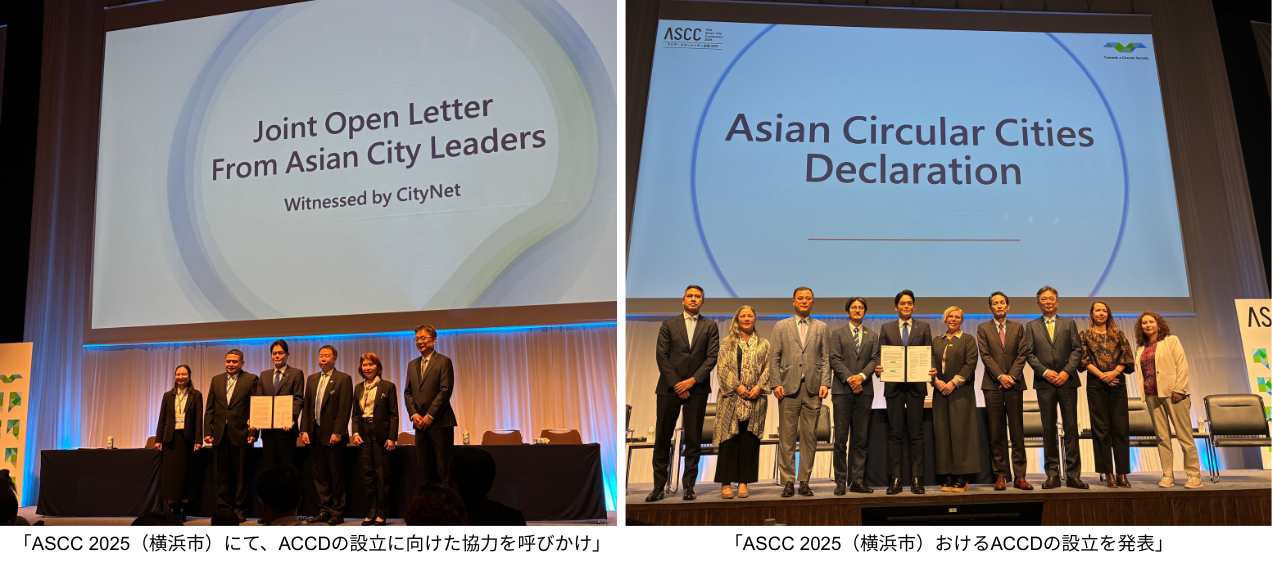
Image source: ICLEI Japan – Asian Circular Cities Declaration (ACCD)
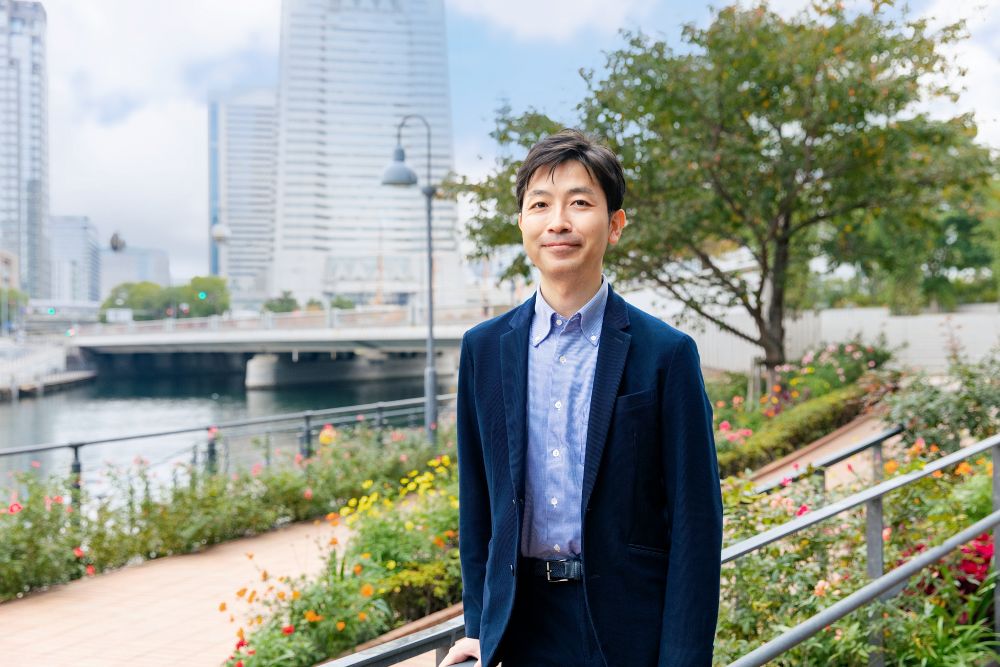
On September 3–4, 2026, the signatory cities will gather in Yokohama for the first time at the “Asia-Pacific Circular Cities Forum 2026 (APCC Forum),” to be held at PACIFICO Yokohama North. We sat down with Toshikazu Yazawa (谷澤寿和), Director of Global City Strategy at the City of Yokohama’s Policy Management and International Strategy Bureau and the official leading the forum’s planning, to hear about the aspirations behind this inaugural event.
Speaker Profile: Toshikazu Yazawa (谷澤 寿和)
Director, Global City Strategy Division, Policy Management and International Strategy Bureau, City of Yokohama. Joined the City of Yokohama in 2008. In fiscal year 2018, he was involved in establishing the City of Yokohama’s Americas Office and served as its inaugural Deputy Director, based in the United States until fiscal year 2022. From fiscal years 2023 to 2024, he oversaw inter-city partnerships through international technical cooperation with Asian cities including Bangkok, Thailand, as well as support for Yokohama-based companies expanding their businesses overseas. In fiscal year 2025, he worked alongside ICLEI Japan to establish the Asian Circular Cities Declaration (ACCD). In fiscal year 2026, he is leading the planning of the Asia-Pacific Circular Cities Forum (APCC Forum).
Cities as the Stage for Implementation
Cities—where people live and economies operate—are grappling with global challenges such as climate change while searching for future growth models. Yazawa sees the development of cities where resources circulate as “a vital key to reconciling environmental and economic goals.”
So who drives that circulation? Yazawa draws a clear distinction between the roles of national governments, businesses, consumers, and local authorities.
“National governments create the rules and regulations; businesses develop the technologies and solutions; consumer behavior shapes the market. But cities are the stage where all of this is put into practice, and local governments are responsible for creating the conditions that make implementation possible.”
Regulations, technologies, and consumer behavior alone cannot bring about a circular economy. Cities are where these elements meet, are tested, and take root in society—and preparing that environment is the work of local government. Resource collection, public procurement, providing testbed environments, public awareness campaigns: local governments actually have a wide range of tools at their disposal for shaping circular economy markets.
At the same time, cities can also be limited in their power. Many Asian cities face fiscal and human resource constraints, and the voice of any single city carries only so far. That is precisely why solidarity matters, says Yazawa.
“The voice of a single city is limited. But by uniting cities and building momentum for circular cities across Asia as a whole, we hope to attract policy support and development assistance for urban initiatives.”
The ACCD is a framework through which cities commit to and sign on to actions toward becoming circular cities. This declaration is both an expression of shared values and a mechanism for amplifying the small voices of individual cities into something larger.
Six Months of Building Community, Then Moving to Action
The first six months after the ACCD’s launch were “a period of building community,” Yazawa recalls. ICLEI Japan, as secretariat, solicited signatures, while the City of Yokohama reached out to long-standing inter-city cooperation partners such as Bangkok in Thailand, Cebu in the Philippines, and Da Nang in Vietnam.
The result was 26 cities from 7 countries: Japan, South Korea, Indonesia, the Philippines, Thailand, Vietnam, and Malaysia. ICLEI Japan designated these cities as “founding signatory cities.”
In June of this year, ICLEI Japan and the City of Yokohama attended ICLEI’s World Congress in Bonn, Germany—a gathering of city representatives from around the world—where they presented the ACCD movement to delegates from cities across the globe.
Now, the phase of building community has given way to a phase of promoting action. As part of this effort, ICLEI Japan is currently conducting a survey of the founding signatory cities, including Yokohama, to analyze the state of their progress toward becoming circular cities and to identify shared challenges. The results are scheduled to be released at the September 2026 forum.
From “Smart City” to “Circular City”
The birth of the ACCD has also transformed the international conference that the City of Yokohama has long hosted. The “Asia Smart City Conference (ASCC),” held 14 times since 2012, becomes the “Asia-Pacific Circular Cities Forum” this year. What does the name change signal?
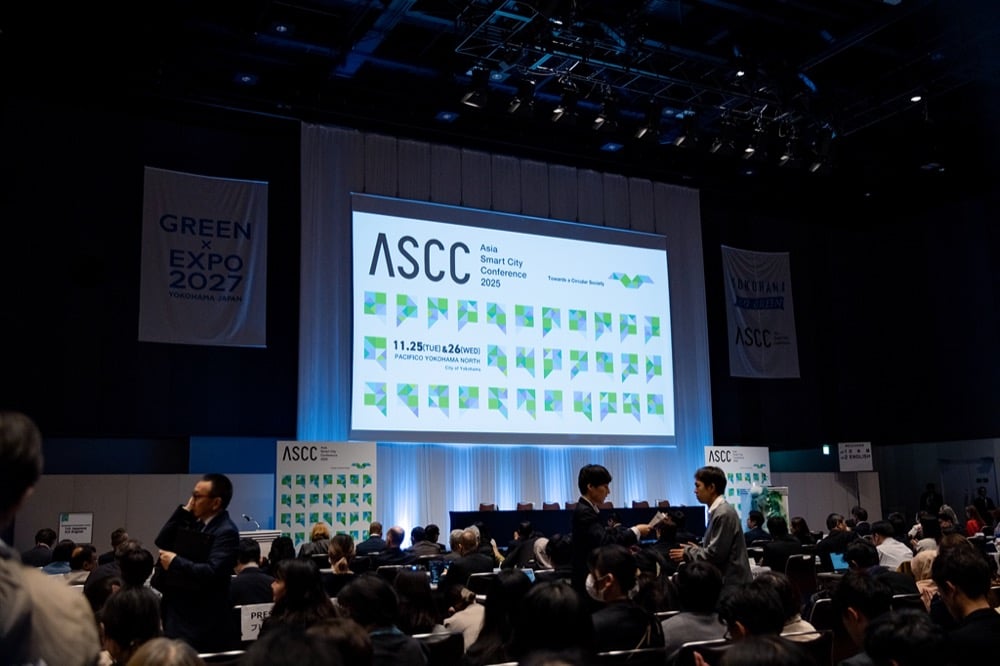
A scene from ASCC2025
“With the establishment of the ACCD, we wanted the name to reflect our collective commitment to pursuing the transition to circular cities across the region. Becoming a circular city is not something local governments can achieve on their own. One of the great strengths of this forum is that it brings together diverse stakeholders—businesses, government agencies, and others—for open dialogue.”
Yazawa identifies three goals for the inaugural forum: getting to know one another; evolving the ACCD into a framework accompanied by joint action; and gaining recognition and attention from central government ministries and international organizations in each country. On the second point, he has in mind the launch of a project to collect best practices from Asian cities—with the aim of facilitating the horizontal sharing of successful examples and promoting the adoption of business solutions in cities.
And the top priority was neither a joint declaration nor a showcase of achievements.
“First and foremost, it’s about getting to know each other. Since this is the inaugural forum, we believe there is inherent value in cities that share the same aspirations learning about what initiatives others are undertaking and what challenges they face.”
Getting to know one another is the starting point for dialogue. Rather than presenting what has been accomplished, participants bring what they are working on and where they are struggling. The entire forum is structured to foster exactly that kind of conversation.
The Twenty-Six Signatory Cities, Each Seeing a Different Landscape
Twenty-six cities have signed the ACCD and are working toward the transition to circular cities. Yet the path to that transition is not the same for every signatory. The stage of economic development and the nature of waste management challenges vary enormously from city to city.
Yazawa contrasts two different starting points. In cities like Yokohama, where waste management is already at a high standard, the immediate challenge is how to integrate environmental policy with industrial policy. Meanwhile, emerging Asian cities that still face significant challenges at the disposal stage must build the urban systems for the reverse logistics side of the economy while simultaneously—or sequentially—advancing circular industrial policy. The destination may be the same, but the starting points and the routes are different.
This premise is woven into the language of the framework itself. In the ACCD documents, ICLEI Japan explicitly states that “effective approaches will differ depending on the level of development and available resources.”
So if the paths diverge, what do cities share? The ACCD sets out 10 declaration commitments, covering everything from setting circular economy goals and strategies, to promoting markets through public procurement, to building regulatory frameworks that enable secondary material markets and repair and reuse, to monitoring progress.
“For example, the 17 Goals of the SDGs are sometimes called a common language for the world. I hope that the ACCD’s declaration commitments will become a shared reference point—a common language—for local government policy toward circular cities. Having a shared set of commitments means that even when cities differ in what they are doing or how far along they are, communication between them becomes far more effective.”
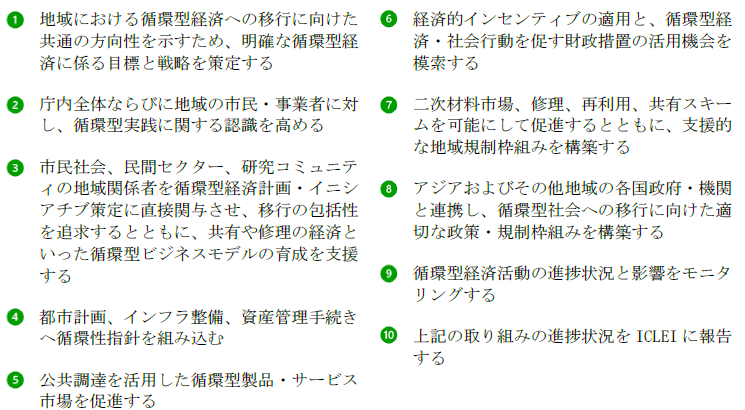
The declaration commitments of the Asian Circular Cities Declaration (ACCD) (Image source: ICLEI Japan)
The paths may differ. But by sharing a common vocabulary for dialogue, cities can continue moving toward the same destination.
Europe’s Top-Down Regulatory Approach vs. Asia’s Accumulation of Practice
What path will Asia’s transition to circular cities take? And how does it differ from the route European circular cities have traveled?
“When it comes to approaches to the circular economy, Europe tends toward top-down regulation, while Japan is characterized by the accumulation of on-the-ground practice. I think this practice-based approach is well suited to the scale of cities, and it may hold a key to advancing a distinctly Asian transition to circular cities. In other words, rather than only ‘building a large framework first and then aligning society to it,’ there is something distinctly Asian to be found in ‘building up a circular system through the accumulation of on-the-ground practice.'”
Yazawa framed this not as a rejection of regulation-first approaches, but as a method that is particularly available to actors operating at the scale of a city.
Seen this way, conditions unique to Asia begin to look less like barriers to transition and more like raw material for practice. Rapid urbanization, concentrations of manufacturing industry, the presence of local communities and the informal sector, the coexistence of rapidly growing cities and cities beginning to shrink in population—Yazawa names these as challenges, while also positioning them as experiences worth sharing. That is precisely why the horizontal network of cities through the ACCD and the knowledge-sharing hub of the APCC Forum are so central.
“I hope that the very process of sharing practices and challenges accumulated in cities will come to be recognized as a defining characteristic of the Asian approach to circular cities.”
Social Implementation and Market Formation as the Next Challenges
Building up on-the-ground practice—the City of Yokohama itself, which is leading this path, stands before its own challenges.
In the four-year plan “Yokohama City Medium-Term Plan 2026–2029,” adopted in June 2026, the City of Yokohama positioned “the transition to a circular city” as a cross-departmental project. Yazawa describes its content and current status:
“It is an ambitious strategy that seeks to connect every stage of the resource circulation ecosystem—food, construction, manufacturing, reverse logistics, consumer behavior—and address them comprehensively. At the same time, many of the initiatives are still at the trial stage, and we see the further promotion of social implementation and generating impact on market formation as major challenges going forward. These challenges around promoting social implementation and market formation are ones that every city likely shares.”
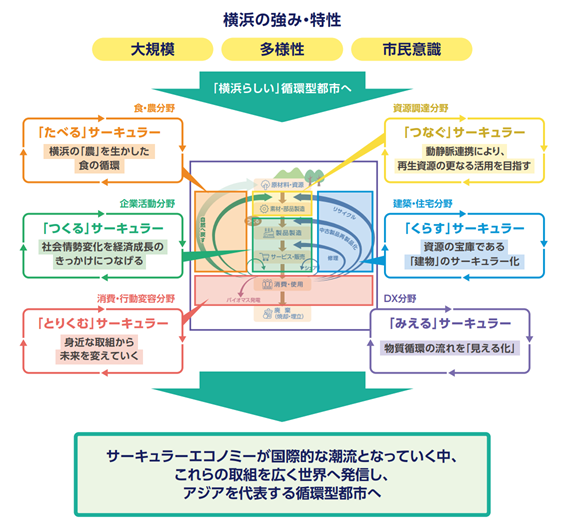
“YOKOHAMA CIRCULAR LINK” — aiming for a circular city at every stage of production, consumption, and resource recovery. Image source: Yokohama City Medium-Term Plan 2026–2029
With this in mind, the forum features programming designed to engage directly with these challenges. A session titled “What Do Businesses Need from Local Governments?” invites companies working on the circular economy to share the challenges they face and what they expect and hope for from cities. This is followed immediately by a public-private dialogue between Yokohama city officials and business representatives on the theme of “The Potential for Alignment Between Municipal Policy and Business.” The intent—to go beyond corporate PR and dig into the challenges of circular cities and the possibilities of local government policy—is evident in the program’s structure.
“Rather than simply showcasing what has been achieved, I want to generate discussion about what hasn’t been achieved, what the gaps are, and how they might be addressed.”
Creating a space where government can receive stimulation from outside—including on what it has not yet managed to do—and doing so by government’s own initiative: Yazawa calls this “challenge-oriented dialogue.” The aim is better policymaking and the implementation of business solutions in cities.
Leading the Way Creates Positive Pressure Within City Hall
Even as it grapples with its own challenges, the City of Yokohama is exercising leadership across Asia. Since the days of the Asia Smart City Conference, Yokohama has drawn on its own experience solving urban challenges to pursue growth alongside Asian cities through public-private international cooperation. The trust and networks built with Asian cities through that work form the foundation of both the ACCD framework and the APCC Forum.
What is particularly interesting is that the responsibility of being a leader also works on the city from within.
“It may sound a little paradoxical, but I feel that Yokohama’s effort to fulfill its role as a leader through the APCC Forum and the ACCD creates positive pressure for the staff in each department involved in Yokohama’s circular economy work, motivating them to do even better.”
Building an international framework is not only an act of outward communication—it also serves as a mechanism for driving change within city hall.
That said, learning does not flow in only one direction. Just as the leapfrog phenomenon—where developing economies skip intermediate stages of development and jump straight to advanced technologies—has been observed in digital adoption and other areas, there is much that Japanese cities can learn from emerging cities, Yazawa notes.
There is also meaning for businesses. How can Asia’s informal economy be integrated into circular systems? Understanding these issues and building connections with Asian cities can be a valuable opportunity for Japanese companies thinking about expanding into Asian markets or building circular supply chains, Yazawa suggests.
How Far Does the Voice of Asian Cities Reach?
There is one more challenge Yazawa speaks about candidly: the power to communicate.
“Personally, I am aware that Asian cities have relatively less influence in international discourse compared to cities in Europe and North America.”
For example, in 2018, New York City introduced the “Voluntary Local Review” system—a mechanism for cities to voluntarily report their progress on the SDGs—and advocated for it at the United Nations and among cities worldwide. Today, more than 400 reports have been submitted by cities around the world. The same is true of Amsterdam, which was among the first to put forward a circular strategy. When it comes to setting international agendas, cities in Europe and North America appear to have the advantage, even at the city level.
Can Asian cities find their own voice? Since cities are the stage for implementation, the discussions happening there need to reach the wider world. What the ACCD ultimately aspires to develop is an advocacy function, Yazawa says—a point he has been discussing with ICLEI Japan.
“Precisely because the role of cities is so important, there is value in ensuring that the discussions within the ACCD and the APCC Forum do not remain confined to Asian cities, but reach multilateral conferences and international deliberations. As a first step toward that goal, this forum is where we begin to share the situation and challenges facing Asian cities with a diverse range of stakeholders.”
Designing Serendipity
After the 2025 Asia Smart City Conference, the feedback that came in most frequently expressed satisfaction with the opportunities for exchange. Comments such as “It was wonderful to be able to meet and talk with senior officials from local governments in the Philippines that I would never normally have the chance to meet” and “I was able to connect with a far more diverse range of people than I had expected” were among those received.
In planning this forum, Yazawa is equally focused on how to generate those encounters—what he calls “serendipity,” the art of sparking unexpected meetings and discoveries. He traces this instinct back to his own experience.
“I myself have had many experiences where a chance encounter led to something meaningful in my work. And those experiences almost always happened somewhere outside the office.”
Chance encounters happen beyond the usual boundaries. The solution, then, is to create situations where people who would not normally cross paths find themselves in the same place. That is why the forum brings together such a diverse range of stakeholders.
“I build the program by reaching out individually to people I think might spark something new if they were on stage.”
This time, there is also a particular focus on cultivating horizontal connections among domestic local governments. Whereas the Asia Smart City Conference was structured around Yokohama and overseas cities, the APCC Forum is also designed to be a space where Japanese local governments can meet one another.
Gathering at the venue will be approximately 30 cities, including ACCD signatory cities. International organizations such as UN ESCAP, UNDP, the World Bank, CITYNET, and the World Economic Forum will also participate, as will specialist organizations including the Ellen MacArthur Foundation and Circle Economy. Time for direct conversation with speakers and international participants will be built into the program, including after sessions and during a networking lunch.
The forum’s gaze also extends further ahead. The year 2027, when GREEN×EXPO 2027 is held, will be a year in which Yokohama draws global attention. The aim is to build momentum for circular cities in the lead-up to next year and beyond—which is why the forum’s theme includes the phrase “GREEN×EXPO 2027 and Beyond.”
“The APCC Forum will continue after GREEN×EXPO 2027 concludes, and we hope that through policy achievement, it will become part of that event’s legacy.”
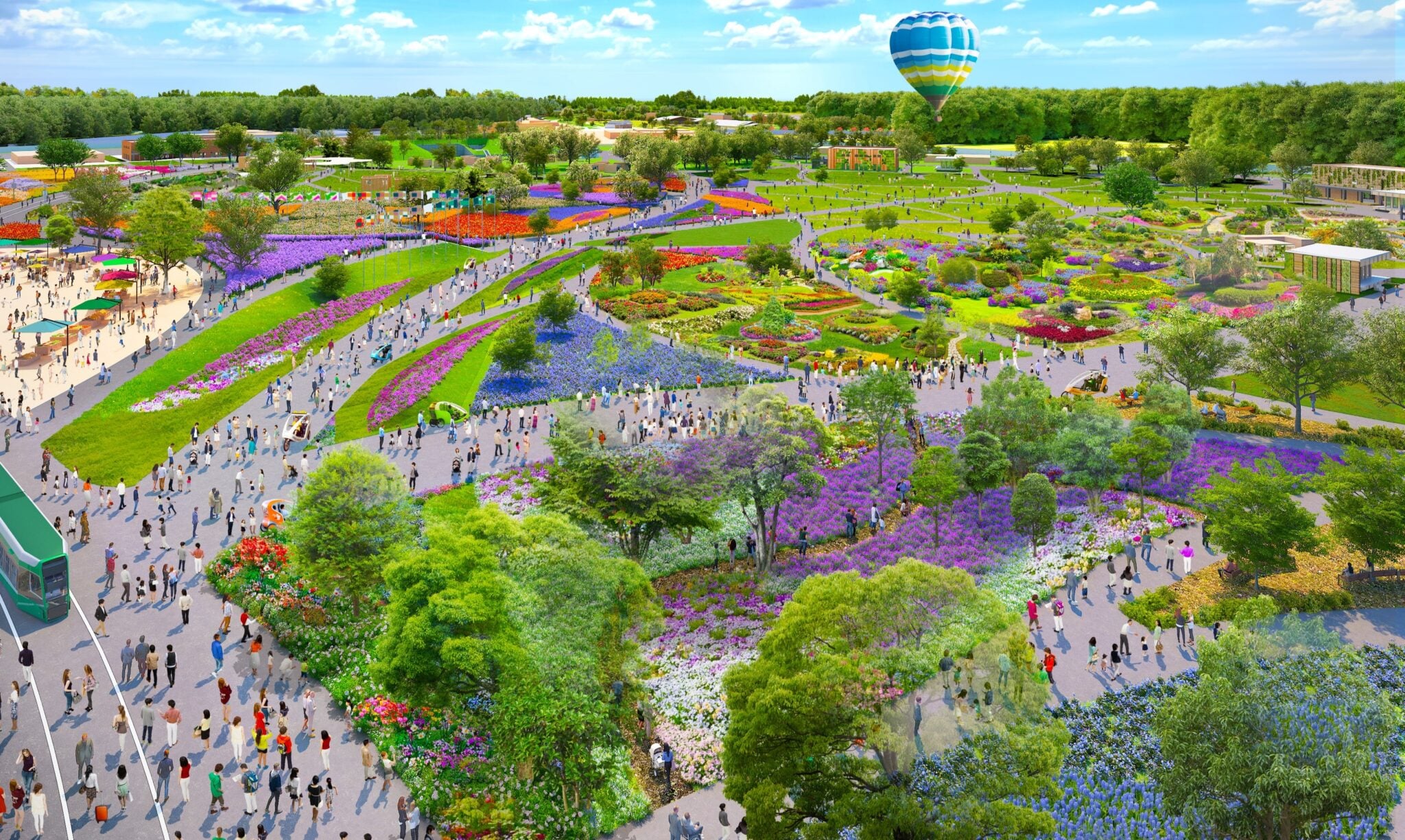
Image courtesy of the GREEN×EXPO Association
Yazawa’s intended audience extends beyond city stakeholders. Given that many guests will be attending from Southeast Asia, he believes that people involved in building circular supply chains or developing markets in Southeast Asia will find particularly useful insights and perspectives through the lens of “the city.”
While the ACCD is a framework grounded in knowledge-sharing between cities, advancing social implementation requires partnership with businesses. For those interested in the ACCD as an Asian urban framework, this forum serves as an entry point connecting the ACCD with the business community. For those interested in local government policy and dialogue with public administration, the sessions featuring business representatives offer a way to gauge the possibilities of municipal policy.
The City of Yokohama will itself be present across multiple departments. Resource circulation, economic promotion, public architecture, climate change countermeasures—the departments involved in the circular city transition project will each be represented at the venue in their own capacity.
Global challenges such as climate change and resource security are now directly shaping how local governments operate. That is why Yazawa concluded with the hope that the discussions held at this forum will reach relevant organizations and international bodies in each country, generating a virtuous cycle of better urban policy and contributions to solving global challenges.
Event Overview
- Name: Asia-Pacific Circular Cities Forum 2026 (Asia-Pacific Circular Cities Forum 2026)
- Theme: Pathways to Circular City Transitions in the Asia-Pacific Region — Urban Solidarity and Concrete Action, Toward GREEN×EXPO 2027 and Beyond
- Dates: Thursday, September 3 – Friday, September 4, 2026
- Venue: PACIFICO Yokohama North (Minato Mirai, Nishi Ward, Yokohama)
- Organizer: City of Yokohama / Co-organizer: ICLEI Japan (General Incorporated Association)
- Admission: Free (pre-registration required)
- Registration: Registration page
- Other: Free entry and exit / Attendance at individual sessions of interest is welcome / Approximately 30 panel displays / Networking space available
Highlighted Program Sessions
- September 3: “What Vision Are City Leaders Charting?” — Through the words of mayors and experts from Asian cities, participants will explore where Asia’s circular economy stands today and examine its challenges and prospects. City leaders from across Asia, including the Mayor of Cebu City in the Philippines, will be joined by the Ellen MacArthur Foundation, Circle Economy, the World Economic Forum, and the GREEN×EXPO Association.
- September 4 (morning): “What Do Businesses Need from Local Governments?” — Key figures from leading companies in construction, manufacturing, packaging, and digital transformation will discuss the frontlines of circular business and collaboration with local governments. A parallel session will see the World Bank and infrastructure companies explore pathways for resource circulation infrastructure in emerging Asian cities. Participating companies include Takenaka Corporation, Yamaha Motor Co., Ltd., Tetra Pak, Recotec, and JFE Engineering Corporation.
- September 4 (afternoon): “How Can We Accelerate the Circular City Transition?” — The results of the survey ICLEI Japan is conducting among the founding signatory cities will be released, and the next concrete actions under the ACCD will be discussed and announced. This session will present a data-driven picture of what circular cities in Asia look like today.
Register for the APCC Forum (free)
Visit the official APCC Forum website
※ Speakers and program are subject to change.
【Reference】Asia-Pacific Circular Cities Forum 2026 Official Website
【Reference】Asian Circular Cities Declaration (ACCD) | ICLEI Japan
【Reference】The “Asian Circular Cities Declaration Framework” Has Officially Launched with 21 Cities (City of Yokohama Press Release)
【Related Article】[September 3–4 in Yokohama] Now Accepting Participants for the “Asia-Pacific Circular Cities (APCC) Forum” — Discussing Pathways to Circular City Transitions!
※ This article is reprinted from IDEAS FOR GOOD, operated by Article Inc.