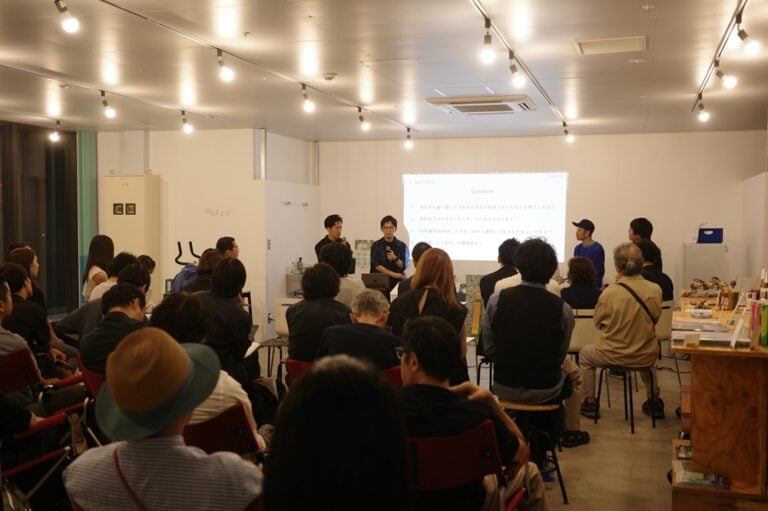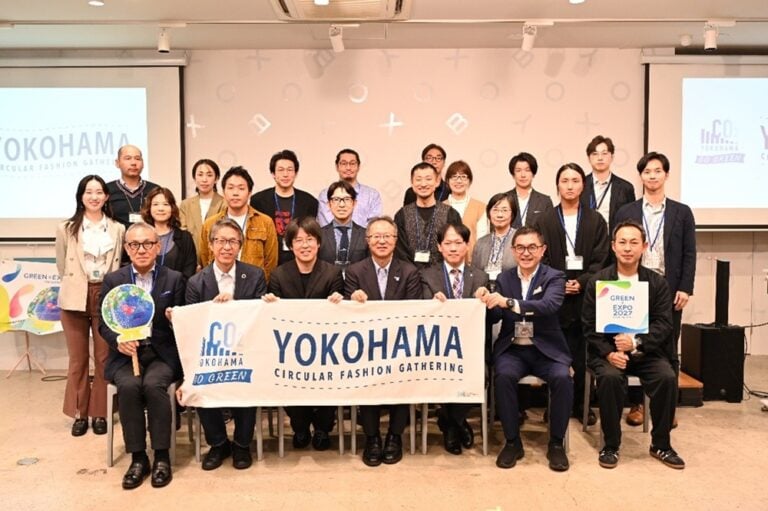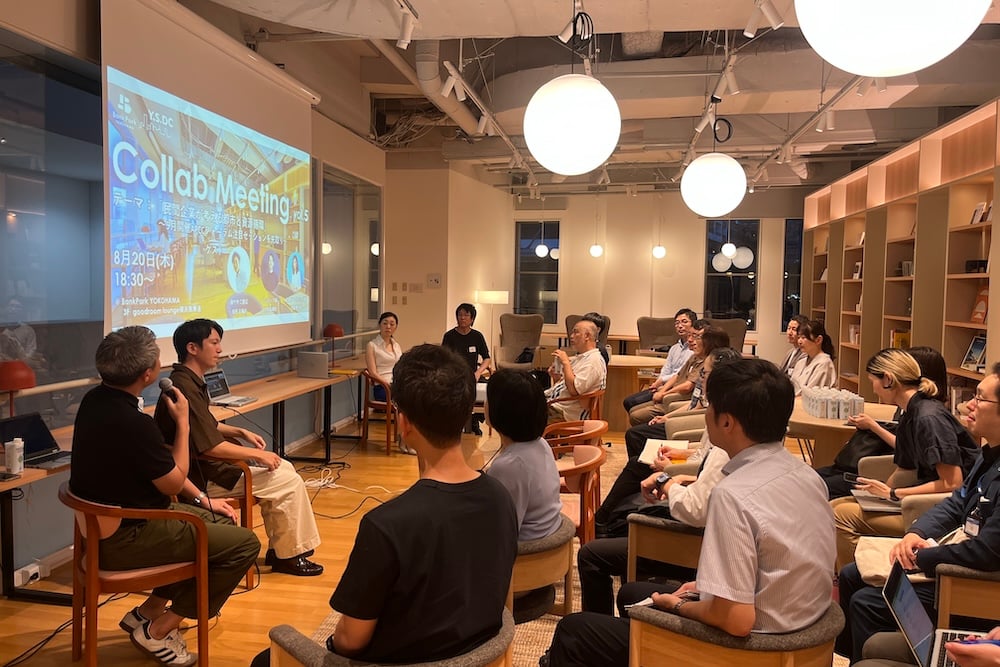
Takenaka Corporation Co., Ltd. hosts a monthly sustainability-themed talk event series called “Collab Meeting” at BankPark YOKOHAMA, a cultural exchange hub utilizing a historic building in Naka Ward, Yokohama. The fifth installment of the series was held on August 20, 2026 (Thursday).
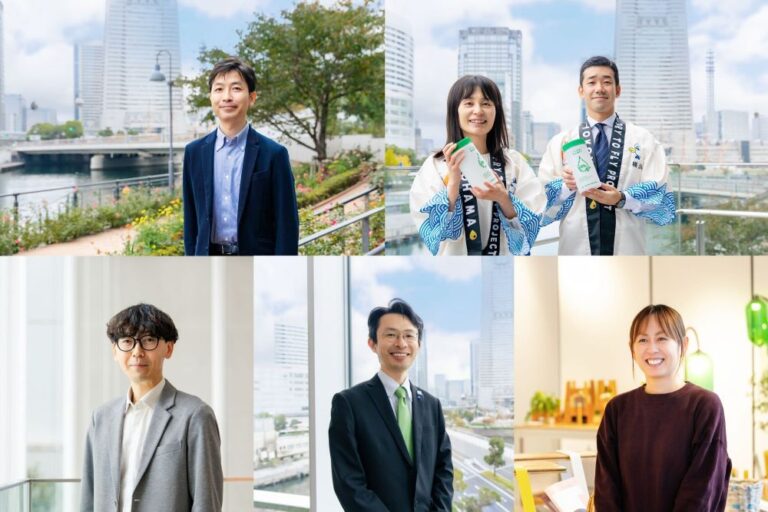
The theme of this session was “How Private Companies Think About Cities and Resource Circulation.” Held as a preview of the Business Sector Session at the Asia-Pacific Circular Cities Forum (APCC Forum), making its Yokohama debut on September 3–4, 2026 (Thursday–Friday), three companies took the stage: Takenaka Corporation, a general contractor; Recotec, operator of “pool,” a digital data infrastructure platform for resource circulation; and Nippon Tetra Pak, a provider of food processing machinery and paper carton filling and packaging systems.
These three companies, each tackling resource circulation from a different angle, discussed what it takes to keep resources circulating within cities rather than discarding them, and what possibilities lie in collaboration between businesses and local governments. This article reports on the event, held in anticipation of the APCC Forum.
Thinking About the Future of the Circular Economy Through the Lenses of “Asia-Pacific” and “Cities”
To open the event, Toshikazu Yazawa (谷澤寿和), Director of Global City Strategy at the City of Yokohama’s Policy Management and International Strategy Bureau, introduced the background behind the APCC Forum.
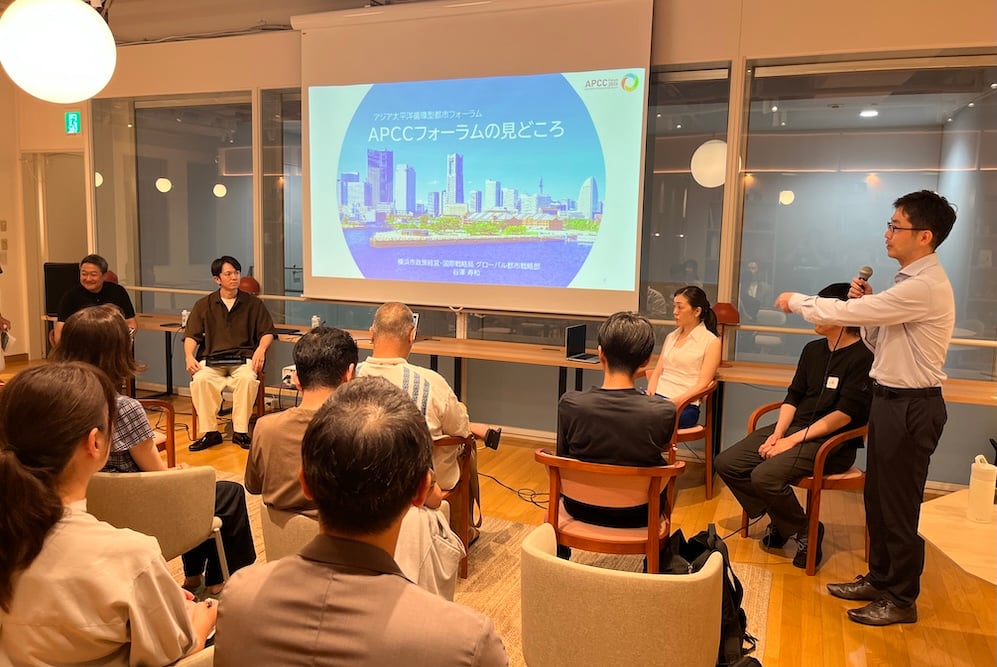
Yazawa highlighted two keywords central to this year’s APCC. The first is “Asia-Pacific.”
When people think of the circular economy, Europe tends to come to mind as the frontrunner. Yet advancing the circular economy in the Asia-Pacific region — which is home to roughly 60% of the world’s population and serves as the hub of global manufacturing supply chains — carries enormous significance for reducing the environmental burden on the planet as a whole.
The second keyword is “cities.”
“Cities are where everything actually comes together — where governments set the rules, businesses develop technologies and services, and consumers make their choices.”
Local governments have a role not only in waste collection and recycling, but also in shaping the urban environment where circular systems are actually put into practice. That is precisely why the APCC Forum aims to reframe the circular economy through the lens of the city as a unit.
What Yazawa described as “truly unique on a global scale” is the Forum’s cross-cutting approach to understanding circular economy efforts at the city level.
“There are plenty of reports analyzing the circular economy at the national level, but reports that compile how cities are approaching it — what they’re doing and what challenges they face — are far less common.”
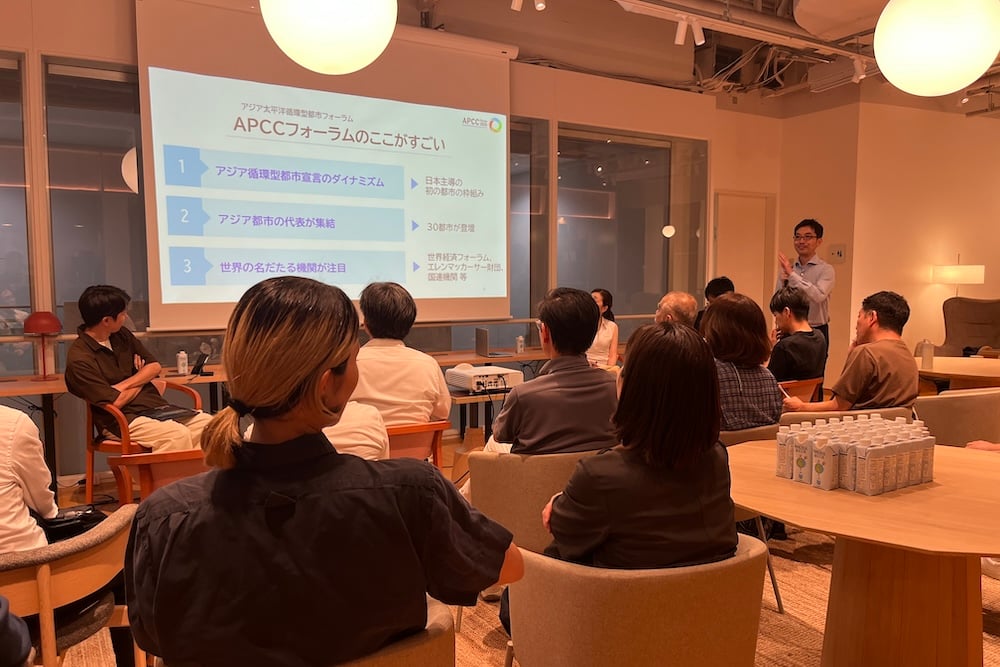
The “Asian Circular Cities Declaration (ACCD),” spearheaded by the City of Yokohama, has drawn participation from 26 cities across 7 Asian countries. At the closing session of the APCC Forum, ICLEI Japan (Local Governments for Sustainability) is scheduled to present its analysis of the initiatives and challenges of the participating cities.
How are cities across the Asia-Pacific putting the circular economy into practice? The Forum’s purpose, Yazawa explained, is to share where each city currently stands and what challenges it faces — and from there, to collectively envision what the circular city of the future might look like.
How Can Companies Collaborate with Cities to Implement Circular Systems?
Next, the three companies set to participate in the Business Sector Session on September 4 — “Industrial Transformation Toward a Circular Economy and the Role of Cities: What Do Circular Economy-Driven Companies Expect from Cities?” — each presented their respective initiatives.
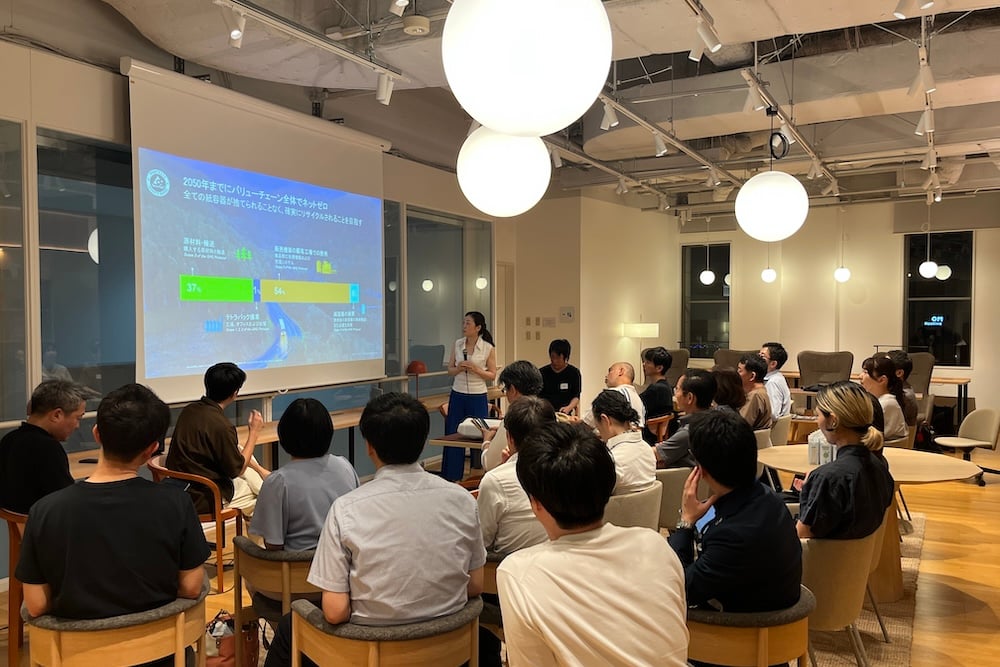
Omori (大森) from Nippon Tetra Pak introduced the company’s business as a “total system supplier” offering not only paper cartons but also food processing machinery. He went on to explain that the company is working toward net zero across its entire value chain by 2050, pursuing initiatives such as transitioning to alternative materials for its containers and promoting recycling.
Presenting a wide range of efforts — from reducing CO₂ emissions by switching to sugarcane-derived materials, to establishing collection points and raising consumer awareness — Omori expressed the company’s commitment to resource circulation: “It’s not enough to just make the container. We need to think about what happens after the last drop is consumed.”
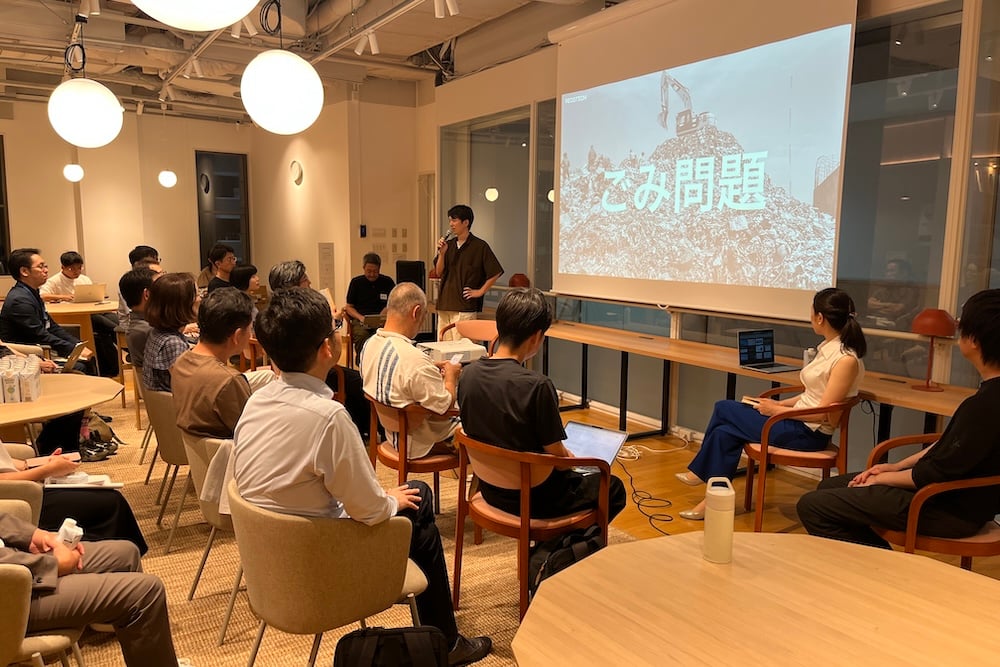
Next to present was Omura (大村) from Recotec, a startup designing resource circulation systems that approaches Asia’s waste challenges by building digital infrastructure.
Operating under the concept of “turning major consumption hubs into major supply hubs,” the company notes that shifting social conditions and regulatory changes are driving a transition in how waste is perceived — from something to be “processed” to a “resource to be procured.” At the same time, Omura pointed to the lack of incentives for sorting and the inefficiency of collection as persistent challenges. The company’s service “pool” — which visualizes the volume and types of waste as data and connects waste generators, collection operators, and resource users — has been deployed at public facilities in Yokohama and elsewhere, contributing to more efficient collection routes.
Omura further stressed that “it’s essential to have data on how much waste currently exists and how much has been reduced.” He proposed treating waste buried in cities as “above-ground oil fields” and called for building systems across Asia to capture primary waste data. If we can know where resources are, what kind they are, and how much exists, we can aggregate them and generate value. This, he argued, would allow what was once landfilled at great cost to become a profitable resource — improving public health while also attracting private investment.
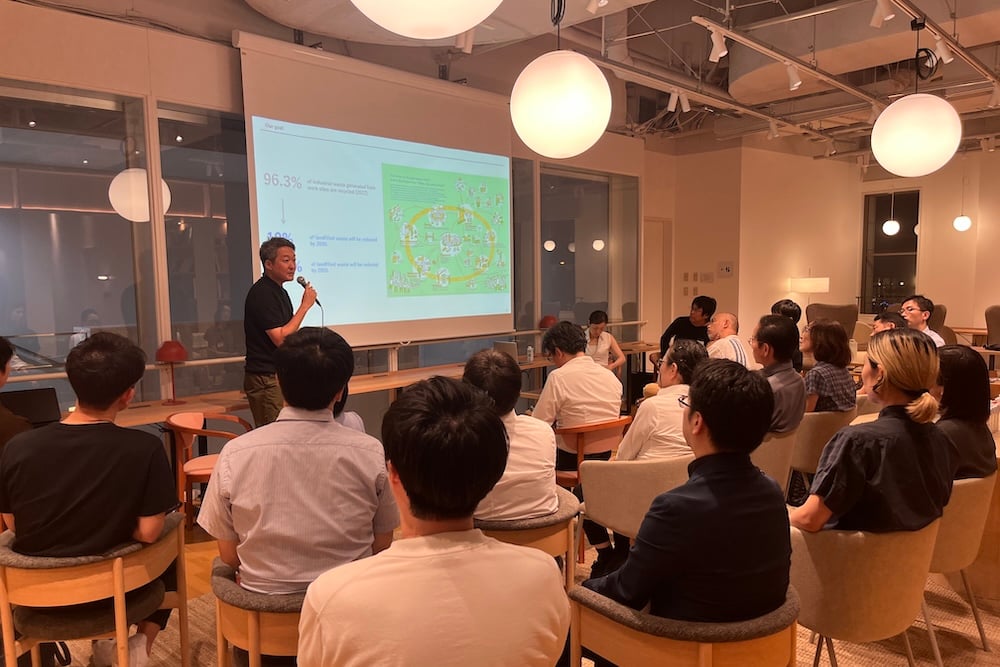
The final presenter was Fukui (福井) from Takenaka Corporation. The company champions “Circular Design Build” in the fields of architecture and urban development, pursuing initiatives that encompass the full lifecycle of a building — from design and construction through to demolition and disposal.
While the construction industry consumes vast quantities of resources, demolition generates enormous amounts of waste. Takenaka Corporation has set a target of achieving zero final disposal by 2050, working toward this goal through the reuse of building materials and material recycling. The company is also collaborating with the operator of Material Bank, a sample marketplace for architectural designers, to develop a feature that allows users to compare and search for building materials based on their circularity. Efforts are underway to embed “circulation” into the design process from the very start.
Fukui also highlighted “Asia” — one of the key themes of this year’s APCC. While the company has long looked to Europe to learn about the circular economy, this year it visited Indonesia and Singapore. Driven by the question of how to develop circular approaches rooted in Japan’s and Asia’s own resources and cultures — rather than simply importing European frameworks — Fukui spoke of finding potential in the use of forest resources and in Japanese cultural traditions of cyclical renewal, such as the Shikinen Sengu ceremony at Ise Jingu, where materials are transformed and recirculated over time.
What Do Companies Expect from Local Governments? Challenges in Advancing the Circular Economy
The event then moved into a panel session featuring all three companies. Facilitator Kato (加藤) from Article Inc. posed the question: “When it comes to implementing the circular economy through collaboration between businesses and local governments, what do you expect from local governments?”
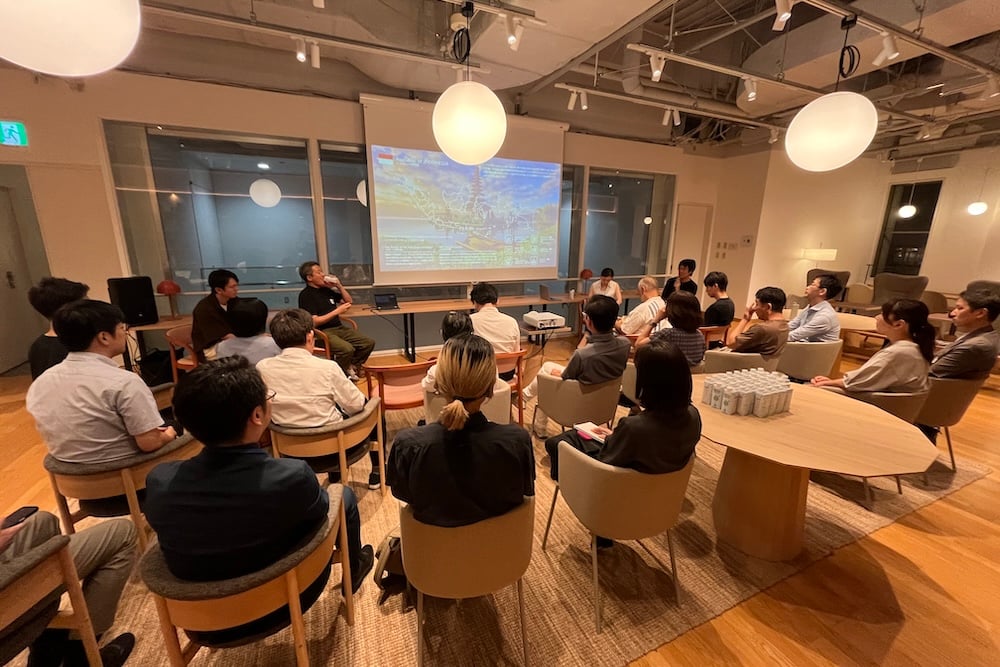
Omura identified “waste collection logistics” as a major challenge for resource circulation. Because recycled materials tend to cost more than virgin materials, economic viability becomes a barrier when companies try to procure circular resources. He proposed that “subsidies for procuring recycled resources, for example, could help accelerate circulation.” He also underscored the importance of local governments using their public facilities as anchor points to engage private companies — with municipalities taking the lead to increase the density of local resources and improve collection efficiency.
Fukui, speaking from the perspective of a general contractor that works with local governments across Japan, emphasized the importance of “locality.” He pointed out that uniform national laws and regulations do not always fit local realities, arguing that “there needs to be some degree of flexibility in how laws are applied based on regional conditions.” He noted that in areas such as the trading of valuable materials and the integration of forward and reverse logistics, challenges around distribution and permitting persist — and that when initiatives are novel, the absence of precedents often means it takes considerable time to gain the understanding of all stakeholders involved.
Fukui also called for attention to rural and mountainous areas, not just large cities like Yokohama. “I think we also need soft-side efforts — things like building maintenance and community upkeep. Creating circular communities and making them economically viable at the same time — that’s the kind of challenge we need to take on,” he said, proposing circular approaches tailored to the unique resources and challenges of each region.
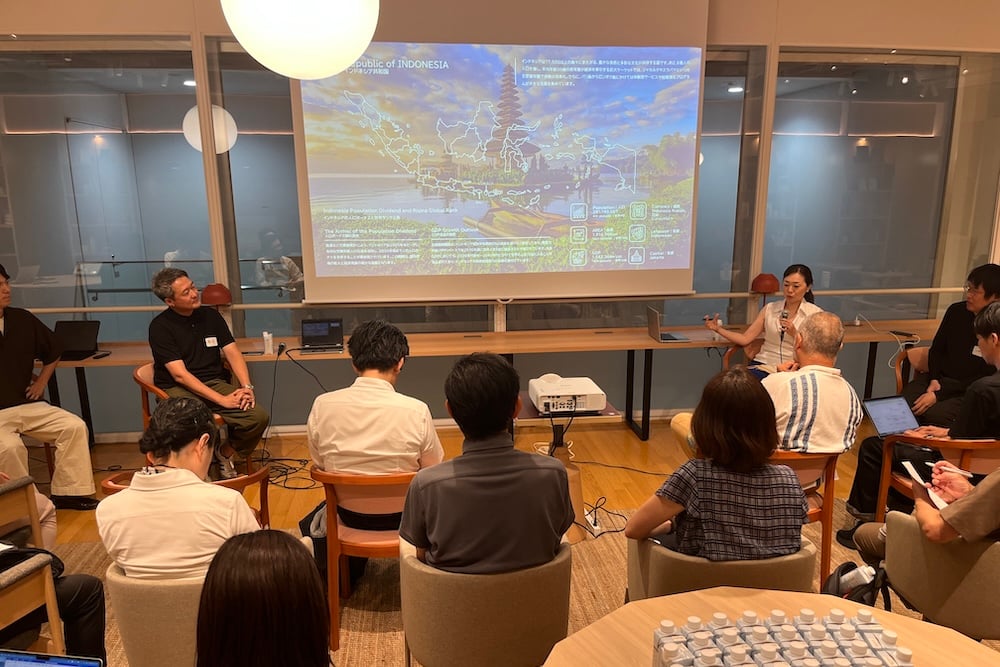
Using Tetra Pak’s paper carton recycling efforts as an example, Omori explained that “how to collect efficiently” is a challenge shared across the industry. Paper cartons are lightweight and generated in small quantities at dispersed locations, making it difficult for collection operators to achieve efficiency. In Japan, in-store collection at supermarkets plays a particularly important role in addressing this.
“Consumers are already making the trip to the supermarket — in other words, the first stage of collection is already being handled by consumers themselves.”
Omori described this retailer-led collection as “social infrastructure.” If labor shortages and an aging population make it increasingly difficult for supermarkets to continue collecting at the same scale, local governments cannot easily absorb that role entirely. “If local governments could recognize the systems that already exist and find ways to channel some form of support to retailers,” he said, making the case that existing private-sector collection systems should be recognized as social infrastructure deserving of support from local and national governments.
Omori also expressed hope for local governments to take a more active role in public awareness. “When consumers try to decide whether something is waste or a recyclable material, the source they rely on most is their local government’s guidelines,” he said. Because information from local governments carries a high level of public trust, he argued that municipalities raising awareness among residents about sorting and collection could significantly broaden the reach of circular practices.
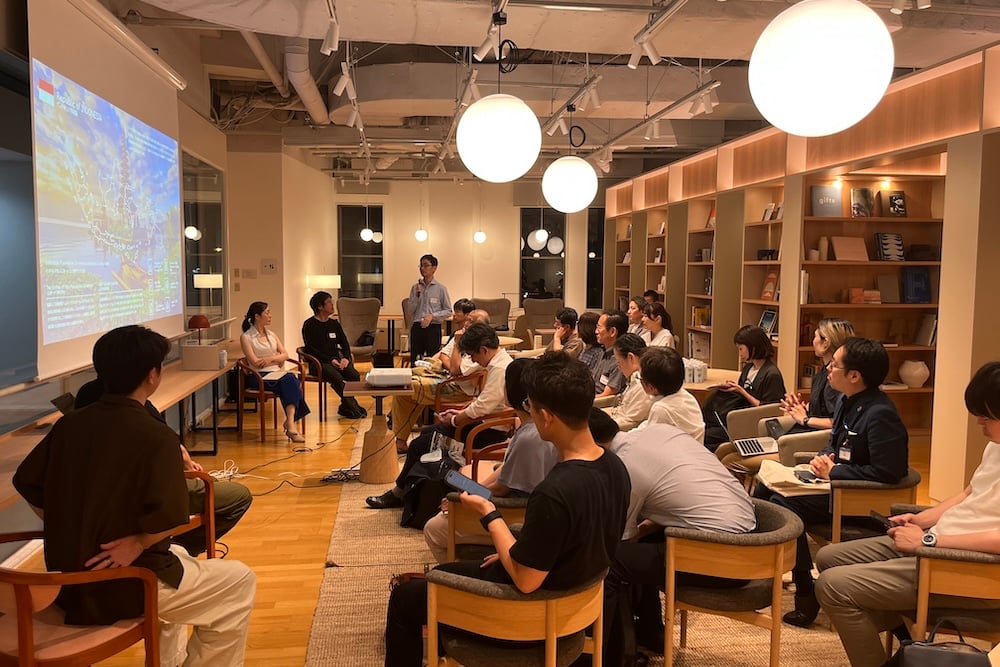
Responding to the companies’ input, Yazawa commented that the inclusion of a Business Sector Session at the APCC Forum was motivated by exactly this kind of discussion. “This is precisely the conversation we were hoping for,” he said. “I want not just Yokohama, but other local governments and cities across Asia to hear these voices as well.”
Yazawa also mentioned that the APCC Forum will include dedicated opportunities for companies and City of Yokohama staff to interact directly. Rather than limiting corporate proposals to one-off projects or pilot experiments, the aim is to translate ongoing dialogue with local governments into improvements in policy and systems — and to carry the conversations that begin in Yokohama outward to other municipalities and cities across Asia.
Editor’s Note
What struck me most about this discussion was how many challenges were shared across three companies from entirely different industries. “How do we collect?” “How do we give resources value?” “How do we change the regulatory framework?” As each company dug into the challenges they face on the ground, it became clear that there are domains no single company can solve alone. At the same time, local governments cannot shoulder everything by themselves either. That is precisely why it matters how we combine the technologies and expertise that companies bring with the public spaces, regulatory tools, and community connections that local governments hold.
What stayed with me in particular was that the “expectations of local government” voiced by all three companies went beyond simply asking for regulatory changes or subsidies. In other words, what companies are really asking of local governments may not be for them to do something on their behalf — but to work together to create an environment within communities where resource circulation can naturally take hold.
This event became a space where companies and local government could reflect on resource circulation from their respective positions and exchange candid views. It is to be hoped that dialogues like this one will go beyond individual pilot projects and initiatives to become catalysts for transforming the very systems that cities run on.
At the APCC Forum in September, the discussions from this event will be expanded to the broader Asia-Pacific region, with cities sharing the challenges they face and the circular approaches unique to their own contexts. We look forward to seeing where the dialogue that begins in Yokohama leads — and what kind of circular city future it helps to shape.
APCC Forum — Event Overview
Theme: Pathways to Circular City Transitions in the Asia-Pacific Region — Urban Solidarity and Concrete Action Toward GREEN×EXPO 2027 and Beyond
Schedule:
- September 2, 2026 (Wednesday): Study tour for invited overseas cities (for conference participants from overseas cities and organizations)
- September 3 (Thursday): Opening Session, Plenary Session, Practical Session on Zero-Waste Cities, and more
- September 4 (Friday): Business Sector Session, Finance Session, City-to-City Cooperation Session, Youth Session, Asian Circular Cities Declaration (ACCD) Session, and more
Venue: PACIFICO Yokohama North
Organizer: the City of Yokohama
Co-organizer: ICLEI Japan
Format: In-person (archived video of select sessions to be released at a later date)
Language: English (simultaneous Japanese-English interpretation provided; some sessions in Japanese only)
Admission: Free
Registration: Apply via the website (pre-registration required)
Official website: https://apcc.city.yokohama.lg.jp/
【Reference】Asia-Pacific Circular Cities Forum 2026 | APCC-Forum 2026
【Related Article】[August 20] Talk Event “How Private Companies Think About Cities and Resource Circulation” to Be Held at BankPark YOKOHAMA
【Related Article】Charting a Path to Circular Cities That Reflect Each Region’s Character: The Vision Behind Yokohama’s Asia-Pacific Circular Cities Forum
【Related Article】How Do We Build Circular Cities for a Sustainable Future? Circularity Starts with Cities That Act Without Waiting [ASCC2025 Report]